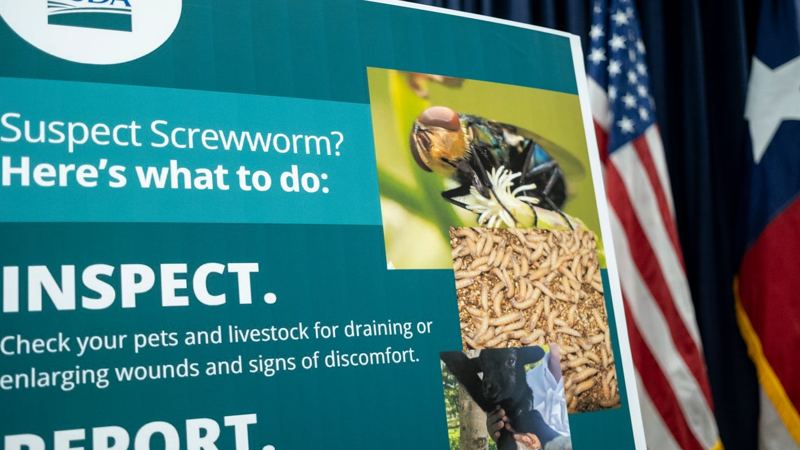
Pet owners are heightening vigilance after a dog in New Mexico became the first non-livestock animal infected in the current New World screwworm outbreak in the United States this week. As of June 9, five cases have been reported in the U.S., with the parasitic fly threat continuing to grow in Texas and extending into New Mexico.
The New World screwworm is a parasitic fly whose larvae feed on the living tissue of warm-blooded animals, including livestock, pets, wildlife, and less commonly people and birds. According to the USDA, the current risk to animals and people in the United States remains very low and the condition is not contagious. Infestations begin when a female fly lays eggs on a wound or body opening. The eggs hatch into larvae that burrow into the wound and feed on living tissue for approximately seven days before dropping to the ground, burrowing into soil, and pupating. Adult screwworm flies emerge from soil after seven to 54 days. The affected dog had recently visited Mexico, and the case is believed isolated, though the dog’s full travel and exposure history remains under investigation.
Pet owners should continuously monitor their animals for wounds, checking regularly for unusual swelling, discharge, or foul odor, which may indicate fly larvae. Behavioral changes in pets—including pain, licking or chewing at a wound, loss of appetite, and lethargy—warrant immediate veterinary attention. Adult New World screwworm flies have distinctive orange eyes, metallic blue or green bodies, and three dark stripes across the back.
If infection is suspected, veterinarians should promptly inspect, remove, and kill all larvae and clean suspected lesions. The FDA issued an emergency use authorization for lotilaner to treat screwworm in dogs in October 2025 and for cats in November 2025. Nitenpyram-based and isoxazoline-based oral products are also effective. Pet owners should report suspected cases to their veterinarians and local authorities for continued surveillance.
This article is an AI-assisted summary. All facts and figures are drawn from the original report: https://www.usatoday.com/story/life/pets/2026/06/09/new-world-screwworm-texas-outbreak-dogs-pets/90462229007/