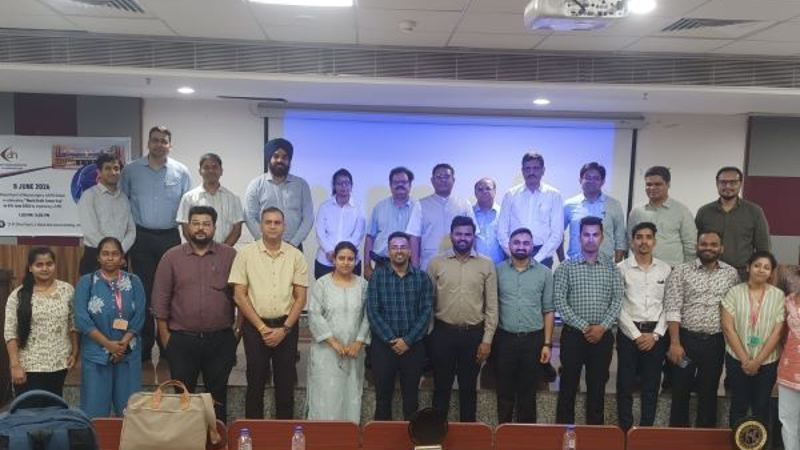
On World Brain Tumour Day, the Department of Neurosurgery at AIIMS Raipur held a Continuing Medical Education program to update clinicians on recent advances in diagnosis and treatment. Dr. Anil Kumar Sharma, Head of the Department of Neurosurgery, highlighted advances in neuroimaging, microsurgical techniques, neuronavigation, neuroendoscopy, molecular diagnostics, and targeted therapies that have significantly improved patient outcomes in recent years.
Warning Signs and Diagnosis
Dr. Sharma identified early warning signs that should not be ignored: persistent headaches, seizures, unexplained vomiting, visual disturbances, weakness of limbs, behavioral changes, and speech difficulties. Presentations are often non-specific; symptoms may begin with a simple headache and progress to altered mental status, vision loss, paralysis, or speech deficits. Early diagnosis by a neurosurgeon or neurophysician is critical for planning initial treatment.
CT scans or MRI are used for diagnosis. Given the non-specific presentation and how signs and symptoms can lead to delayed diagnosis, diagnosis is crucial in early disease stages.
Tumor Characteristics and Risk
A brain tumor is an abnormal mass of tissue where brain cells multiply uncontrollably. Depending on the tumor’s location, multiplying speed, and spread, tumors are graded from 1 to 4. Brain tumors can be benign or malignant and can affect any portion of the brain, skull, spinal cord, and vertebrae. They may originate from neural elements within the brain or represent spread from distant cancers in organs such as the lungs, breast, or kidney.
Brain tumors can affect people of any age; children account for 15% to 20% of brain tumors. While the exact cause is unknown, factors that may play a role include radiation exposure, radiotherapy, genetic causes, and family history of brain tumors. Risk for most types increases with age, though some types are common in children.
Treatment and Outcomes
Surgery is the main treatment option for brain tumors. Many non-cancerous tumors can be completely cured by surgical removal. Where complete removal is not possible, chemotherapy and radiotherapy are recommended. In many malignant cases, long-term survival is possible with accurate surgery and other management.
Outcome and overall survival depend mainly on patient age, tumor type, whether it is benign or malignant, the extent of surgical excision, and tumor characteristics. An untreated brain tumor can lead to serious life-threatening complications. Dr. Sharma concluded: “Brain tumours are treatable, and in many cases curable, when detected early. Awareness and timely intervention remain the strongest tools in improving outcomes for patients.”
This article is an AI-assisted summary. All facts and figures are drawn from the original report: https://newsriveting.com/clinicians-updated-on-brain-tumour-treatment-advances-at-aiims-raipur/