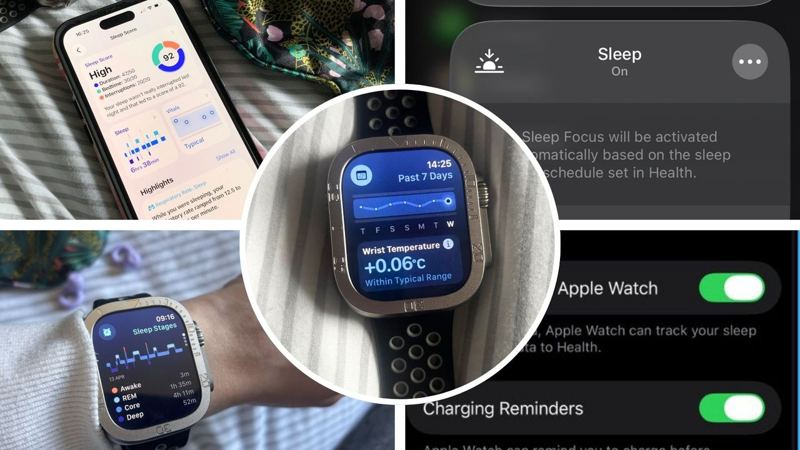
Sleep experts explain that Apple Watch wrist temperature tracking provides a useful window into sleep quality when viewed as a trend over time. The Apple Watch Series 8 and later models, along with all models of the Apple Watch Ultra, gather wrist temperature data during sleep. After five nights of wear, the watch establishes a baseline and flags changes going forward.
How Temperature Affects Sleep
According to Professor of Neuroscience Matthew Walker, sleep is fundamentally a thermal event. A drop in core body temperature of about one to two degrees Fahrenheit (roughly half a degree to one degree Celsius) signals the brain that it is time to sleep. Walker notes that the brain will not reliably let go of wakefulness until it sees core temperature cool, which is why people find it easier to fall asleep in a room that is too cold than too hot. Circadian rhythm hormones—cortisol for alertness and melatonin for sleep—respond to temperature changes. When core body temperature drops, the brain releases melatonin, promoting sleep; when it rises, melatonin is suppressed.
Factors That Raise Nighttime Temperature
Late heavy meals, evening exercise, stress, excessive screen time, and hormonal fluctuations all elevate body temperature at night. Research in the Journal of Clinical Sleep Medicine has linked late night meals and snacks to increased sleep latency and poorer sleep quality. Dr. La Puma notes that a woman’s resting temperature rises about half a degree in the second half of her menstrual cycle. In the luteal phase—roughly two weeks after ovulation—basal body temperature climbs three to five tenths of a degree, which represents healthy physiology rather than poor recovery.
Optimizing Sleep Temperature
Experts recommend keeping bedroom temperature between 65 to 68 degrees Fahrenheit (18 to 20 degrees Celsius). Choosing breathable bedding and sleepwear made from natural cotton or wool instead of synthetic fibers or memory foam can improve nighttime thermoregulation. A calming evening routine free of alcohol, late meals, and intense workouts, along with turning off screens an hour before bed, helps the body initiate the temperature drop necessary for quality sleep.
This article is an AI-assisted summary. All facts and figures are drawn from the original report: https://www.tomsguide.com/wellness/sleep/experts-explain-why-your-apple-watch-tracks-your-wrist-temperature-during-sleep