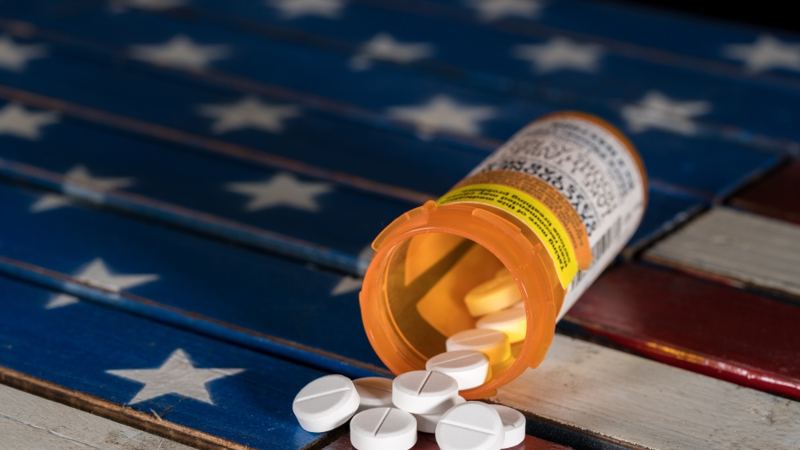
Approximately 88% of Americans view opioid overdose deaths as a very serious problem with high agreement across political groups, according to a national survey conducted by Weill Cornell Medicine researchers and published in JAMA Network Open. Political differences emerge, however, in views about who bears responsibility for addressing the crisis.
The study surveyed 1,552 adults in 2025, exploring how perceptions of opioid overdose deaths and responsibility varied by political ideology. Historically, Americans viewed people who use opioids as primarily responsible for the overdose crisis, with conservatives especially emphasizing personal responsibility. The new research reveals a significant shift: across the political spectrum, more people now place responsibility on pharmaceutical companies as well as individuals. According to Dr. Beth McGinty, chief of the Division of Health Policy and Economics at Weill Cornell, “Addiction is so stigmatized that we were anticipating that responsibility would still center on people who use opioids. Pharmaceutical companies, however, seem to be front of mind, perhaps because lawsuits highlighting their role in the crisis have received a lot of news coverage.”
More conservatives and moderates still believed that people who use opioids should be responsible for reducing overdose deaths, while more liberals felt pharmaceutical companies should be liable. “Measures such as lawsuits against pharmaceutical companies and investing settlement funds into programs that address addiction and overdose may gain more traction,” Dr. McGinty said.
The survey findings underscore persistent social stigma around opioid addiction: about 38% of participants were unwilling to have a person with opioid addiction as a neighbor, while 58% were unwilling to have someone with opioid addiction marry into their family. Desire for social distance was substantially higher among conservatives compared with moderates or liberals. Past research shows that stigma may hinder evidence-based policies for prevention and treatment of opioid use disorder, including expanded treatment access, harm-reduction programs and non-punitive approaches.
The findings arrive as opioid overdose deaths have decreased significantly. According to the Centers for Disease Control and Prevention, U.S. opioid overdose deaths decreased nearly 27% from 83,140 in 2023 to 54,743 in 2024. Looking ahead, Dr. McGinty’s team is examining public support for state laws requiring substance use treatment programs to offer medications for treating opioid use disorder as a condition of licensing. “While a lot of state programs are historically based on an abstinence approach, these medications are the most effective treatment for preventing overdose,” she said.
This article is an AI-assisted summary. All facts and figures are drawn from the original report: https://news.weill.cornell.edu/news/2026/01/americans-view-opioid-overdose-as-a-crisis-that-needs-to-be-addressed