A U.S. Senate subcommittee hearing scheduled for Wednesday will examine how legalized sports betting has impacted the integrity of professional sports and public mental health. Americans wagered a record $165 billion on sports in 2025, while nearly 20 million people reported “problematic gambling behavior,” according to hearing testimony. The Senate Commerce Subcommittee on Consumer Protection, Technology, and Data Privacy, chaired by U.S. Sen. Marsha Blackburn, aims to understand how traditional betting platforms and emerging prediction markets operate “and what they mean for the integrity of the game.”
Harry Levant, a former Philadelphia attorney and director of gambling policy for the Boston-based Public Health Advocacy Institute, will testify about the growth of legalized sports betting. Now 62, Levant understands gambling addiction intimately. He placed his first bet with a bookie at age 15 and by 2014 had embezzled nearly $2 million from his law practice. He voluntarily reported his crimes to the Philadelphia District Attorney’s Office, was charged with third-degree felony counts of theft and forgery, and surrendered his law license. A Common Pleas Court judge sentenced him to 11 ½ to 23 months but released him on parole, stipulating that he attend addiction counseling and pay restitution, telling Levant: “This doesn’t have to be the end. You can do something with this.”
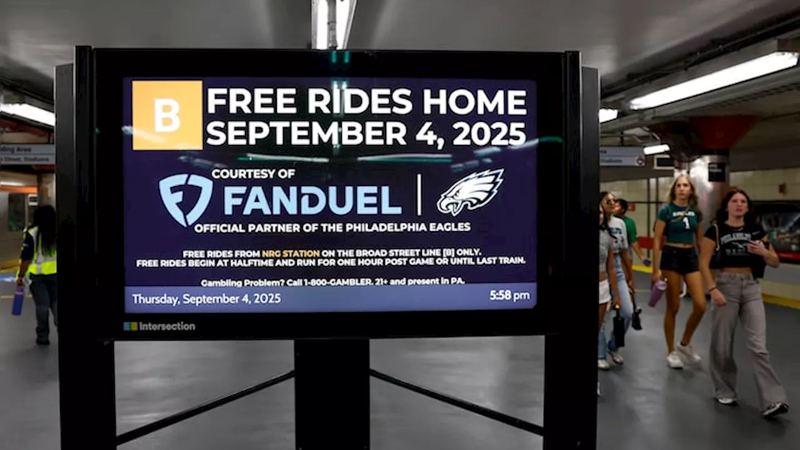
In 2018, Levant enrolled at La Salle University, earning a master’s degree in professional counseling the same year the U.S. Supreme Court overturned the 1992 Professional and Amateur Sports Protection Act, opening the door to legalized sports betting in 39 states and the District of Columbia. DraftKings introduced microbets in 2021, allowing customers to wager on every play of a game. Levant argues that betting companies employ strategies that amplify addiction, sending push notifications and promotional offers informed by customer betting history. The American Gaming Association reported in 2025 that 84% of sports bettors believe the industry is committed to combating problem gambling. Yet calls to the National Problem Gambling Helpline 1-800-GAMBLER soared from 330 in 2021 to 1,171 in 2024. Between January and September 2025, companies spent $37 million on advertisements for online gambling in the Philadelphia area alone—more than any other media market. Levant receives about a dozen emails a week from people seeking addiction help.
Earlier in May, U.S. Sen. Richard Blumenthal and U.S. Rep Paul Tonko, along with four other Congress members, questioned executives about minors accessing their products and how much revenue derives from problem gamblers. Blumenthal and Tonko previously introduced the Supporting Affordability and Fairness with Every Bet Act, which would prohibit sportsbook advertising during live events and prevent companies from accepting more than five financial deposits from a customer in 24 hours. Levant said he sees “the intensification of a burgeoning movement,” predicting “the days of the gambling companies, the prediction markets, and the leagues acting with impunity to monetize and call it revenue are coming to an end.”
This article is an AI-assisted summary. All facts and figures are drawn from the original report: https://us.headtopics.com/news/u-s-senate-to-examine-sports-gambling-s-mental-health-83521275