Efforts to track and understand drugged driving deaths nationwide have stalled amid federal workforce cuts and dwindling investments, even as states grapple with the opioid crisis and expanding cannabis legalization.
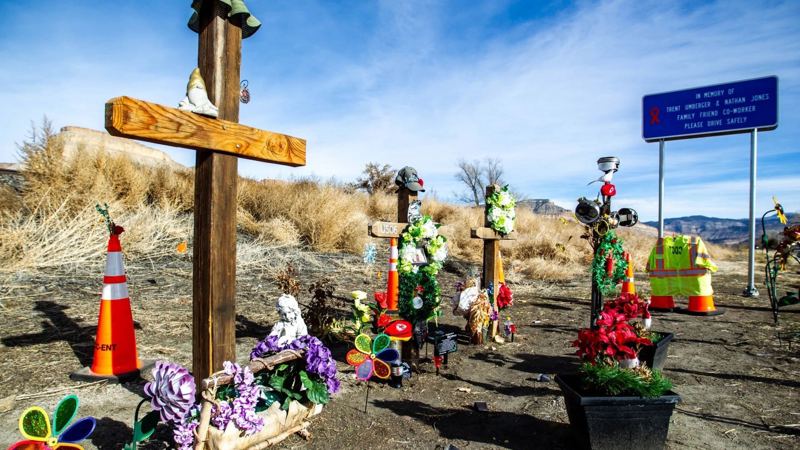
Federal highway safety officials have long tracked the role of alcohol in fatal crashes but do not systematically track deaths involving drugs or a combination of drugs and alcohol. This gap became clear in a September 2024 crash in Grand Junction, Colorado, when a Jeep struck two state transportation workers on U.S. Highway 6. The driver, Patrick Sneddon, then 59, had oxycodone and six times Colorado’s presumed impairment threshold for THC in his blood. Sneddon pleaded guilty and is serving 30 years in prison on three counts of vehicular homicide and other charges. The crash left the widow of one victim writing: “Our four children are completely crushed without their Dad.”
The challenge of proving impairment—since some drugs remain detectable for weeks after use—partly explains the data gap. Colorado’s 5-nanogram THC threshold, for instance, is a “permissible inference” rather than a legal limit like the 0.08% blood alcohol standard, and the level is not supported by published scientific studies, according to the driver’s attorney.
In Mesa County, Colorado, where Jones and Umberger were killed, local coroners track impaired-driving fatalities more thoroughly. From 2017 through 2024, a third of traffic deaths involved alcohol alone, but when drugs are factored in, nearly half of the county’s traffic deaths over the same period involved a driver intoxicated with alcohol, drugs, or a combination.
The National Transportation Safety Board recommended in 2022 that federal agencies establish a comprehensive, nationwide dataset on impaired driving. An NTSB analysis of roughly 26,000 drivers found about half of those arrested for impaired driving and more than a quarter of drivers killed in crashes tested positive for more than one substance. Only four states and the District of Columbia drug-tested more than 60% of fatally injured drivers in 2020.
However, staff cuts at the National Highway Traffic Safety Administration have slowed progress. From 2021 to 2024, NHTSA grew from 600 to 790 employees, but by the end of Trump’s first year in office in 2025, it dropped to about 550 due to government-wide cuts. Five employees left NHTSA’s impaired-driving division last year, leaving just two staff members. A former employee in NHTSA’s behavioral research division said his team of 16 dropped to three or four members.
The 2021 infrastructure law increased NHTSA funding from $667 million in 2021 to nearly $953 million this year, including $750 million for crash-data modernization, but over $475 million remained unobligated as of January. Those funds expired in September unless obligated through signed agreements. A Government Accountability Office report found that nearly a quarter of entities awarded grants in 2022 had not received signed agreements when surveyed between December 2024 and March 2025.
This article is an AI-assisted summary. All facts and figures are drawn from the original report: https://kffhealthnews.org/news/drugged-driving-impairment-research-stalled-trump-policies/