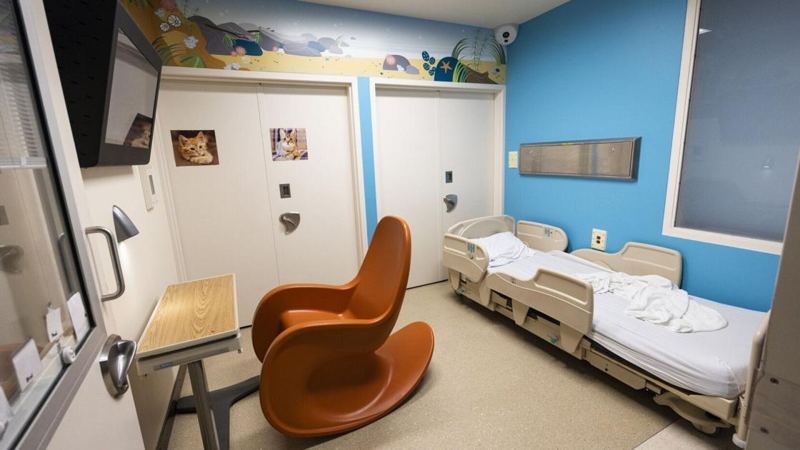
A statewide crisis that left hundreds of Washington youth languishing in hospitals while awaiting psychiatric care is beginning to ease, according to a new report from the governor’s office. For years, children and teens were “boarded” inside hospital wards—sometimes in windowless emergency rooms without their own bathrooms or access to outdoors—because appropriate psychiatric facilities were unavailable. The state now estimates it takes less than half as long as before to find appropriate care for these children.
The scale of the crisis spurred legislative action. In 2023, following a Seattle Times investigation revealing that children were being hospitalized for psychiatric conditions twice as often as a decade earlier, lawmakers unanimously passed legislation to address the problem. Charges to state health plans had risen to more than $150 million annually for these hospitalizations, which confined children to “highly restrictive wards that were neither therapeutic nor medically necessary” without specialized care for serious symptoms like psychosis or intellectual disability.
Measurable Progress Through Coordination
The 2023 legislation created accountability mechanisms, including a new statewide care coordinator role and funds to help families pay for daily living supplies, travel, lodging, and housing. The state also established three contract peer support positions staffed by parents experienced with mental health navigation. These measures, plus $1.2 million in family support funds implemented in October 2024, have shown dramatic results. Children with the most acute needs who once spent more than a year hospitalized now spend about 200 days there. Those with less intensive symptoms are spending about a month, down from 78 days in 2024.
Between January 2024 and June 2025, the care coordination team received an average of seven referrals monthly. Seattle Children’s, which operates the only short-term inpatient psychiatric unit in Washington after Providence Sacred Heart Medical Center’s unit closure in 2024, has submitted at least 45 referrals.
Underlying Resource Gaps Persist
Despite progress, healthcare providers emphasize that fundamental capacity problems remain unresolved. Washington pays for 109 residential beds at four long-term inpatient facilities serving approximately 200 children and teens annually, with staffing and funding shortages preventing full operation. At least one in six children served by the state’s care coordination services still end up sent out of state for residential care. Additionally, the state took over a closed residential campus in Lake Burien in 2024 to address the bed shortage, but the facility has faced allegations of abuse and neglect, prompting a leadership change following findings from the office of developmental disabilities ombuds.
This article is an AI-assisted summary. All facts and figures are drawn from the original report: https://www.union-bulletin.com/news/northwest/wa-cuts-boarding-time-for-young-psychiatric-patients-stuck-in-hospitals/article_751effab-d86f-5d04-91e1-b9a1170f8d76.html