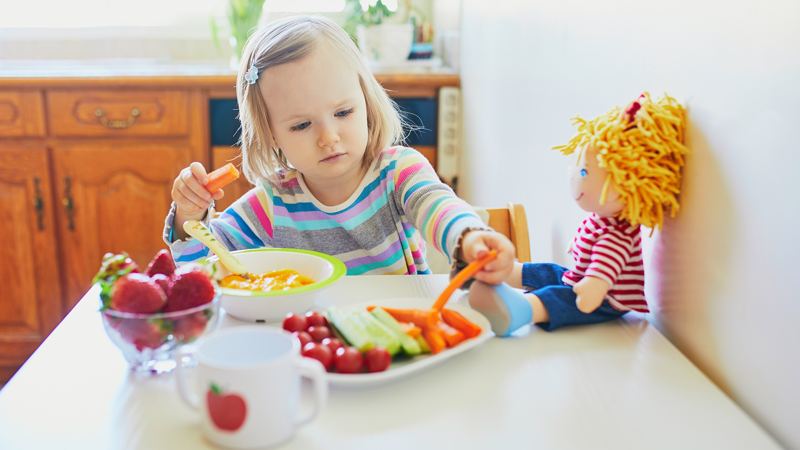
Fetuses exposed to vegetables in utero are less likely to react negatively to the scent of those vegetables later in life, according to new research published in the journal Developmental Psychobiology. The finding could have significant implications for families struggling with children’s vegetable intake—according to 2021 data from the Centers for Disease Control and Prevention, 49% of US children ages 1 to 5 don’t eat a daily vegetable.
The Research Evidence
In previous research by Durham University, fetuses at 32 and 36 weeks gestation displayed distinct facial reactions when their mothers repeatedly consumed non-bitter carrot powder capsules and bitter kale powder capsules, with ultrasounds capturing “laughter face” reactions to carrot and “cry face” reactions to kale before birth. These expressions were also noted three weeks after delivery.
The new study tracked children from the prior research to examine whether prenatal flavor exposure resulted in flavor-specific odor reactions at 3 years of age. The results showed that the 3-year-olds exhibited a significantly reduced rate of negative facial expressions in response to the odor they had been repeatedly exposed to in utero. According to the study authors, “Flavor exposure in late gestation can result in long-lasting flavor/odor memory, confirming that the prenatal chemosensory environment can shape behavioral tendencies years after birth.”
Practical Implications for Parents
The researchers are calling for studies to determine whether prenatal exposure to vegetables leads to actually consuming more vegetables later. Children typically need between 1 and 3 cups of vegetables daily for vitamins, minerals and fiber that support growth, brain development and long-term health.
Instead of resorting to threats and bribery, experts recommend having children help shop for and cook vegetables, pairing them with dips or favorite foods, quietly folding them into smoothies, and being persistent in serving attempts. The study suggests that maternal diet during pregnancy may be an additional tool for supporting children’s vegetable acceptance early in life.
This article is an AI-assisted summary. All facts and figures are drawn from the original report: https://nypost.com/2026/05/15/health/your-kids-more-likely-to-eat-vegetables-if-you-stick-to-an-easy-pregnancy-habit/