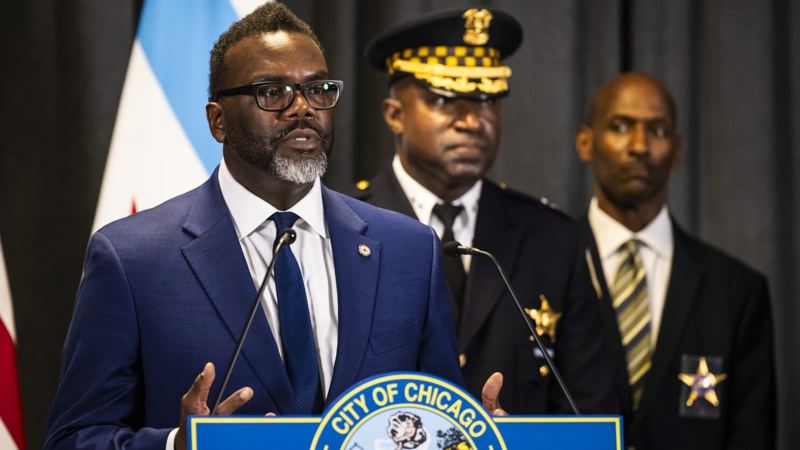
Mayor Brandon Johnson expanded Chicago’s alternate mental health emergency response program to serve all of Chicago’s 22 police districts, up from six. The Crisis Assistance Response and Engagement (CARE) program dispatches teams of mental health professionals to non-violent mental health-related 911 calls instead of police officers and paramedics.
The $5.2 million expansion is funded from the final portion of federal stimulus money delivered to Chicago during the pandemic. Future funding depends on revenue from the mayor’s controversial social media tax—50 cents per user after the first 100,000 Chicagoans on Snapchat, Reddit, Instagram, and other platforms—which is currently facing a court challenge from major tech companies. Deputy Mayor Griffin Krueger said the city is “confident we have a strong [legal] position.”
Currently, CARE teams operate with four vans staffed by one mental health clinician and one emergency medical technician, responding to non-violent crises on weekdays from 10 a.m. to 4:30 p.m. The expansion will double the number of vans to eight with 20 employees, split into north and south zones. For non-urgent mental health responses, Chicagoans can request a CARE visit by emailing CAREprogram@CityofChicago.org.
Alexa James, former CEO of the National Alliance on Mental Illness Chicago, noted that crisis availability remains limited. “Crises happen at 2 in the morning,” she said, pointing out that gaps exist during the many hours when alternate response vans are unavailable. Legal experts suggest the social media tax faces legal obstacles based on a 1983 U.S. Supreme Court decision blocking a Minnesota tax on newspaper supplies, with the First Amendment protections potentially extending to digital platforms.
This article is an AI-assisted summary. All facts and figures are drawn from the original report: https://chicago.suntimes.com/city-hall/2026/05/13/mayor-brandon-johnson-expansion-mental-health-emergency-response-teams