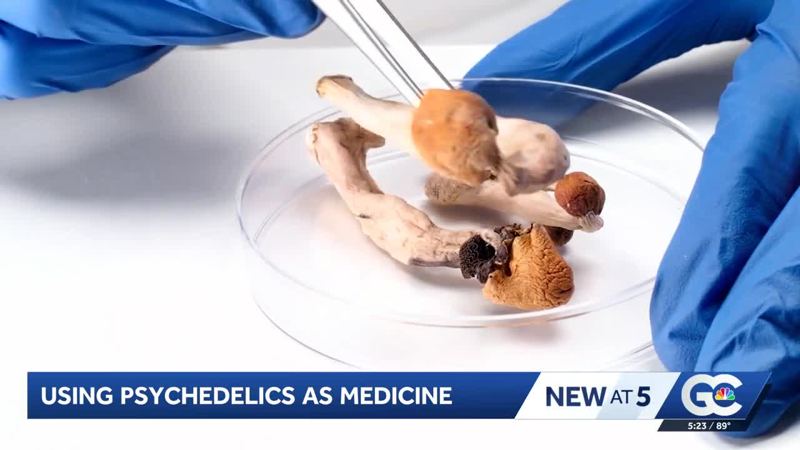
The U.S. Food and Drug Administration has issued national priority vouchers to three companies studying psychedelic-based medicines for mental health treatment. Two companies are researching psilocybin, the active ingredient in “magic mushrooms,” for treatment-resistant depression and major depressive disorder. Another company is studying methylone, a drug similar to MDMA, for post-traumatic stress disorder.
“Psychedelics really are a paradigm changer, potentially,” according to Dr. David Hellerstein, professor of clinical psychiatry at Columbia University. “There really seems to be a unique way that they have of working that one or two doses can cause rapid relief of symptoms within a couple of days, and that for many people that relief seems to last for weeks or months.”
However, Hellerstein raised significant concerns about the transition of these drugs from controlled studies to real-world applications. In clinical trials, researchers “handpick very selected groups of people who are very, they have the pure disorder, they don’t have other conditions, psychiatric or medical conditions, and they’re treated in a very high intensity, high pressure kind of setting in which there’s the least chance of bad things happening.” Once drugs are released to the general public, the focus shifts to “effectiveness” in large populations. “These are people, many of them who would never have been approved to get into a study. They have other conditions in addition to the depression or PTSD,” Hellerstein explained.
The distinction matters because research efficacy in controlled studies differs from real-world effectiveness when patients with comorbidities and less intensive support access the medications. This gap represents a critical unknown as psychedelics move toward broader clinical availability.
This article is an AI-assisted summary. All facts and figures are drawn from the original report: https://www.gulfcoastnewsnow.com/article/psychedelic-research-mental-health-treatment/71299280