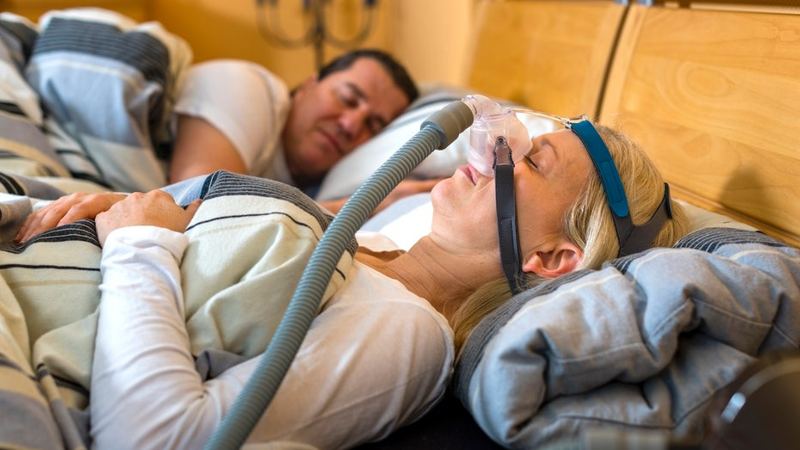
Researchers in Israel have discovered a difference in muscle structure among people with obstructive sleep apnea (OSA). According to a study published in the journal Sleep and Breathing, people with OSA tend to have higher muscle mass index—reflecting greater area relative to height—but lower density. This means people with OSA may look like they have more muscle, but that muscle tends to be less dense and potentially less functional.
The researchers gathered data from 209 adults who underwent overnight sleep studies with chest or abdominal CT scans. Compared with a control group, people with OSA were older, more often male, and heavier on average. They were also more likely to have hypertension, cardiovascular disease and poorer oxygen levels during sleep. The findings showed a significant link between OSA and higher muscle mass index, though lower muscle density was more strongly associated with age and weight than with OSA alone.
Worse sleep apnea severity was linked with lower skeletal muscle density and higher skeletal muscle index, indicating larger but less dense muscle. Higher BMI was strongly linked with lower muscle density and higher muscle mass index, while older age was strongly linked with lower muscle density. Individuals over 60 years old and those with a BMI over 30 had much stronger links to lower muscle density than OSA alone.
Study co-author Ariel Tarasiuk noted that “age and obesity appeared to have a stronger influence on muscle health than sleep apnea itself.” These findings suggest that OSA is much more than a nighttime breathing disorder and may signal underlying metabolic dysfunction affecting multiple systems, including muscle health. The study findings may not apply to all populations, as it was conducted at a single center, and researchers did not have access to information on lifestyle factors like physical activity, diet, smoking or alcohol use.
This article is an AI-assisted summary. All facts and figures are drawn from the original report: https://www.foxnews.com/health/sleep-apnea-may-quietly-changing-your-body-unexpected-way-study-finds