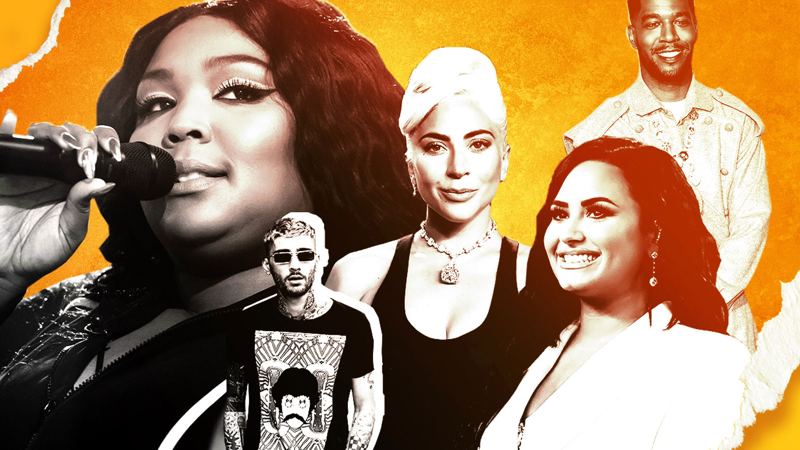
For too long, many people—including musicians—have silently battled mental health issues while putting on a happy face for the world. In recent years, many artists across multiple genres have used their platforms to speak out, destigmatizing everything from depression to bipolar disorder and beyond by opening up about their own struggles and coping methods.
Notable Artists Speaking Out
Adele shared her experience with postpartum depression in a 2016 Vanity Fair cover story, explaining that she had “really bad postpartum depression after I had my son” and that it “frightened” her. Alanis Morissette opened up about postpartum depression after welcoming her third child in 2019, writing on her website about hormonal changes, sleep deprivation, and physical pain. Billie Eilish told Gayle King that newfound fame led to depression and suicidal ideation: “I was so unhappy last year. I was so unhappy and I was so, like, joyless. I didn’t ever think I would be happy again, ever.”
Bebe Rexha announced her bipolar disorder diagnosis via social media in 2019: “For the longest time, I didn’t understand why I felt so sick. Why I felt lows that made me not want to leave my house or be around people.” Halsey shared in a 2016 Billboard cover story that she was diagnosed with bipolar disorder in high school and spent weeks in a psychiatric hospital her senior year. Demi Lovato revealed a diagnosis of bipolar disorder in a 2011 interview with Robin Roberts, though she later clarified in her 2021 docuseries that she had been misdiagnosed.
Guns N’ Roses rocker Duff McKagan revealed that he wrote a song in the midst of a panic attack and has dealt with panic disorder since age 16. Rick Springfield recalled a past suicide attempt in his memoir. At the 2025 Grammy Awards, Chappell Roan used her acceptance speech to call for healthcare—including mental health—for artists.
Advocacy and Resource Support
These artists have used their platforms not only to share personal experiences but also to advocate for systemic change. Their openness has encouraged millions of fans to care for their own mental well-being. For those struggling, the Substance Abuse and Mental Health Services Administration’s national helpline is available 24/7 at 1-800-662-4357. The 988 Suicide & Crisis Lifeline is available 24/7 by calling or texting 988 for confidential support.
This article is an AI-assisted summary. All facts and figures are drawn from the original report: https://www.billboard.com/lists/stars-mental-health-issues-struggles/