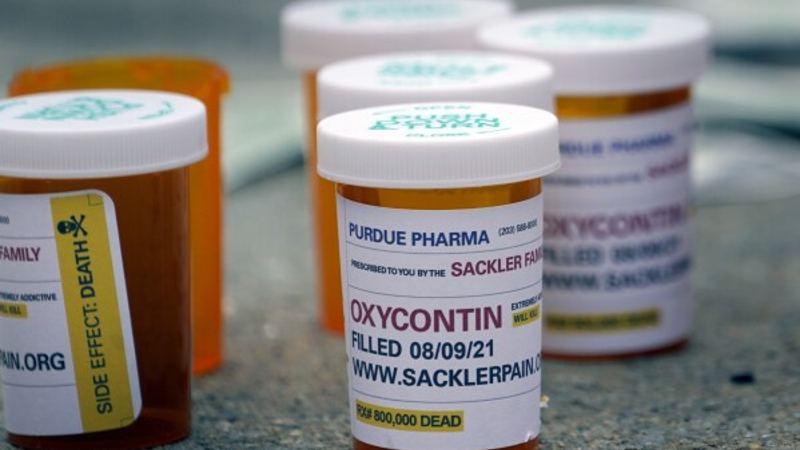
The Supreme Court rejected a nationwide settlement with OxyContin maker Purdue Pharma that would have shielded members of the Sackler family who own the company from civil lawsuits but would have provided billions of dollars to combat the opioid epidemic. In a 5-4 decision, the justices blocked an agreement that had been hammered out with state and local governments and victims. Justice Neil Gorsuch, writing for the majority, said “nothing in present law authorizes the Sackler discharge.” The Sacklers would have contributed up to $6 billion and given up ownership of the company but retained billions more, with the company emerging from bankruptcy as a different entity whose profits would be used for treatment and prevention.
Chief Justice John Roberts and Justices Brett Kavanaugh, Elena Kagan, and Sonia Sotomayor dissented. Justice Kavanaugh wrote, “Opioid victims and other future victims of mass torts will suffer greatly in the wake of today’s unfortunate and destabilizing decision.” The Supreme Court had put the settlement on hold the previous summer in response to objections from the Biden administration. The Sackler family members stated they would return to negotiations, noting “the alternative is costly and chaotic legal proceedings in courtrooms across the country.”
Edward Neiger, representing more than 60,000 overdose victims, called the decision a major setback. “The Purdue plan was a victim-centered plan that would provide billions of dollars to the states to be used exclusively to abate the opioid crisis and $750 million for victims of the crisis,” Neiger said. Ed Bisch, whose 18-year-old son Eddie died from an overdose after taking OxyContin in Philadelphia in 2001, praised the outcome. “This is a step toward justice. It was outrageous what they were trying to get away with,” he said, calling for the Department of Justice to seek criminal charges against Sackler family members.
The central legal issue was whether the bankruptcy shield can be extended to the Sacklers, who had not declared bankruptcy themselves. Gorsuch noted, “The Sacklers seek greater relief than a bankruptcy discharge normally affords, for they hope to extinguish even claims for wrongful death and fraud.” In the decade before entering bankruptcy, Sackler family members received more than $10 billion from Purdue Pharma, about half of which they said went to pay taxes. Opioid-related overdose deaths have continued to climb, hitting 80,000 in recent years, mostly from fentanyl and other synthetic drugs.
This article is an AI-assisted summary. All facts and figures are drawn from the original report: https://apnews.com/article/supreme-court-purdue-pharma-opioid-crisis-bankruptcy-9859e83721f74f726ec16b6e07101c7c