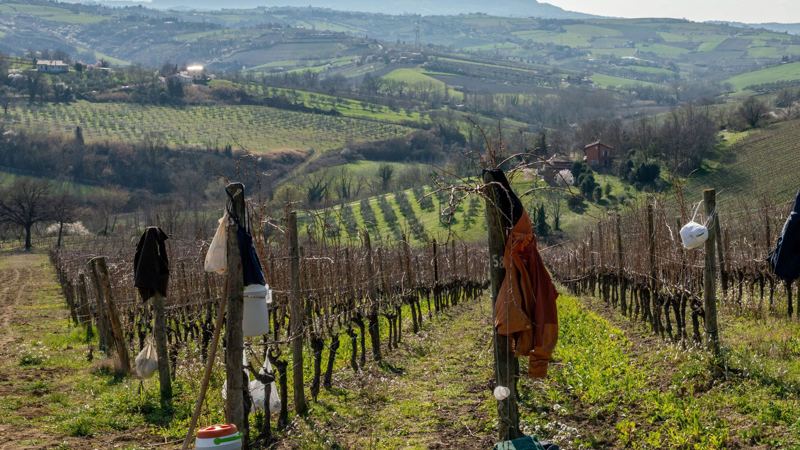
Health and Human Services Secretary Robert F. Kennedy Jr. is championing San Patrignano, a drug treatment community in rural Italy east of Florence, as a model for U.S. addiction treatment. Kennedy has proposed opening government-run farms and work camps in rural American communities where addicted individuals would participate in work-focused treatment emphasizing abstinence. During a Senate hearing last week, Senator Angela Alsobrooks, a Democrat from Maryland, challenged Kennedy about his campaign statements regarding reparenting American children on wellness farms, describing his concept as dangerous and irresponsible. Kennedy later stated, “if I said it, I apologize,” though NPR found he had spoken at length about reparenting American children on government-run farms during at least two different podcast appearances while campaigning.
Kennedy’s vision for addiction treatment stems from personal experience. He used heroin for more than a decade starting as a teenager and credits wellness and work-focused approaches like San Patrignano’s for his own recovery. San Patrignano, created in the 1970s, houses roughly 850 people who work on farms and in textile workshops with a highly regimented schedule focused on community. However, the program does not offer formal therapy or medical care. When NPR visited the facility, leaders expressed surprise at Kennedy’s enthusiasm, with spokeswoman Monica Barzanti stating she had “no record” of Kennedy ever visiting or contacting them.
Kennedy has frequently mischaracterized San Patrignano. He described it as primarily serving children, when in fact the vast majority of residents are adult men. He also described it as housing 2,000 residents when the actual population is roughly 850. Critics, including addiction researchers at Yale University, point out that San Patrignano rejects scientifically proven medications like buprenorphine and methadone, considered the gold standard for treating opioids. Dr. Robert Heimer states, “We know that abstinence-based programs fail over and over again, often very quickly. Your likelihood of dying was 70% higher than if you weren’t in treatment at all.”
San Patrignano’s own medical director, Dr. Antonio Boschini, told NPR it would be “impossible” for their model to be safely scaled into a national program like Kennedy has described. Boschini noted San Patrignano attempted expansion in the 1990s, which was “a disaster” with people getting “out of control” and one person being killed. The community later recovered by downsizing and making sweeping reforms. Public health experts emphasize that street drug deaths in the U.S. have been dropping fast for years, with much improvement attributed to wider access to addiction treatment medications.
This article is an AI-assisted summary. All facts and figures are drawn from the original report: https://www.npr.org/transcripts/nx-s1-5806273