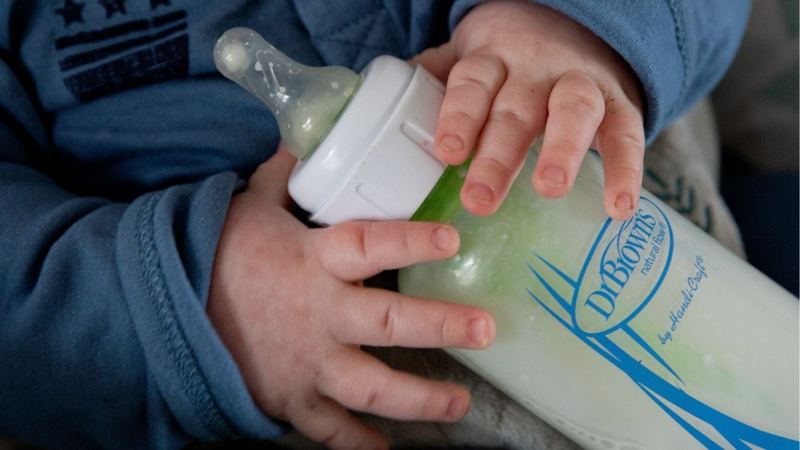
The Food and Drug Administration released results from a comprehensive analysis of infant formula contamination, testing more than 300 formula samples for heavy metals, pesticides, and other contaminants. Between 2023 and 2025, the agency purchased more than 300 infant formula samples from stores and online retailers and tested them for heavy metals (lead, arsenic, cadmium and mercury), pesticides, phthalates, and PFAS (per- and polyfluoroalkyl substances, sometimes called “forever chemicals”).
Overall Safety Findings
The agency reported that the levels of all contaminants were low and the formulas were safe. The FDA analyzed 312 powdered and liquid infant formulas made by 16 brands purchased online and in person, mostly from big box and grocery stores in the northeastern United States. All formula samples tested well below EPA and EU limits for heavy metals, and all but three of the samples were free of the 318 pesticides tested.
Federal health officials and outside experts described the results as reassuring. Dr. Steven Abrams, a professor of pediatrics at the University of Texas at Austin Dell Medical School, said the new FDA analysis was “rigorous and reliable” and should “reassure parents about the safety of infant formulas sold in the United States.” The FDA also tested 110 breast milk samples from a milk bank in Oklahoma for heavy metals and reported that their levels were low.
Concerns About Certain Chemicals
However, some outside experts raised concerns about the low levels of phthalates and PFAS detected in the samples. The FDA detected some phthalates and PFAS in the formula samples, though they characterized the levels as very low. Several samples had levels of DEHP (a type of phthalate linked to reproductive difficulties and an increased risk of cancer) or PFOS (a PFAS linked to impaired immune responses and increased cholesterol levels) above EPA drinking water limits.
Dr. Sheela Sathyanarayana, a professor of pediatrics at the University of Washington, noted that “while these chemicals are widespread in the food supply and have even been found in breast milk, their presence in formula is a concern.” Kyle Diamantas, the FDA’s deputy commissioner for food, said the agency would continue testing infant formula and working with manufacturers to identify ways to further reduce contaminant levels and is working to develop federal limits for heavy metals in infant formulas.
This article is an AI-assisted summary. All facts and figures are drawn from the original report: https://gvwire.com/2026/04/29/fda-releases-results-from-major-baby-formula-safety-study/