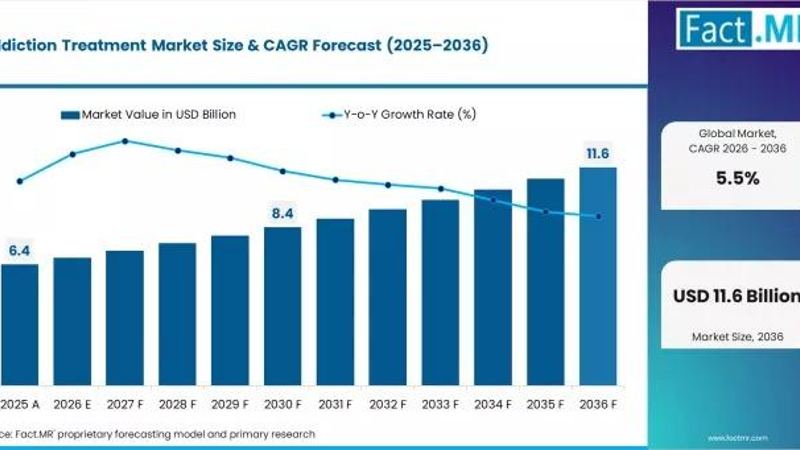
The global addiction treatment market is experiencing rapid expansion, with the sector valued at USD 6.4 billion in 2025 and projected to reach USD 11.6 billion by 2036, according to market analysis by Fact.MR. This growth represents a compound annual growth rate of 5.5%, reflecting a fundamental shift in how healthcare systems approach substance use disorders.
Market Growth Drivers
The expansion is being fueled by integrated care models that combine pharmaceutical treatments with behavioral therapy and digital health solutions. Medication-Assisted Treatment (MAT) dominates the market with a 34% market share, driven by demand for medications including buprenorphine, methadone, and naltrexone to address opioid-related mortality. Long-acting injectables are emerging as a major trend, improving patient adherence by reducing the need for daily dosing—a critical factor in preventing relapses.
Digital therapeutics are playing an increasingly important role, with digital cognitive behavioral therapy platforms bridging access gaps for rural and underserved populations. Mental health parity regulations and Medicaid expansions in the United States are making treatment more accessible and structured as a medical category rather than a social issue.
Market Landscape and Regional Trends
Opioid addiction treatment currently holds approximately 42% of the application segment, largely due to the global opioid epidemic and the efficacy of medication-assisted therapies. Alkermes plc leads the competitive landscape with approximately 18% market share, while Indivior Plc maintains a major presence in the opioid addiction space. Other key challengers include Orexo AB, Titan Pharmaceuticals Inc., and Teva Pharmaceutical Industries Ltd.
North America remains the industry powerhouse, driven by the U.S. opioid response and advanced healthcare infrastructure. The Asia-Pacific region is experiencing the fastest growth, with China expanding at a 7.38% CAGR and India at 6.84% CAGR, fueled by expanding healthcare access and government-led awareness campaigns.
Future Outlook
According to Fact.MR analysis, the future of addiction treatment lies in integrated care models that combine pharmaceutical treatments with digital health monitoring and AI-based relapse prediction systems. The market is expected to favor providers offering personalized, outpatient-centered care with bundled services linking clinical detox, remote monitoring, and long-term behavioral support. The incremental market opportunity through 2036 is projected at USD 4.77 billion.
This article is an AI-assisted summary. All facts and figures are drawn from the original report: https://www.openpr.com/news/4494423/breaking-the-cycle-global-addiction-treatment-market-to-reach