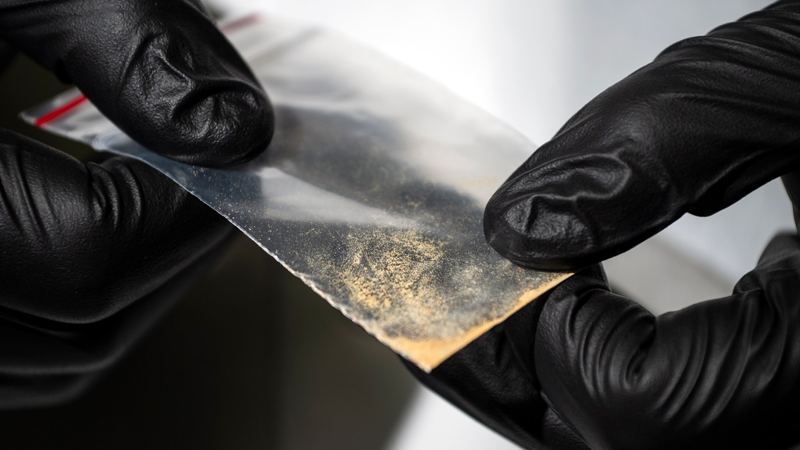
Nitazenes, a class of synthetic opioids originally created in the 1950s but never approved for medical use, are emerging as a significant public health threat. Also known as benzimidazole opioids, nitazenes are five to nine times stronger than fentanyl—itself 25 to 50 times stronger than heroin—making them extraordinarily potent. Isotonitazene, the most common form, can be lethal in doses smaller than 2 milligrams, according to Brian Townsend, a retired DEA supervisory special agent.
While knowledge of nitazenes was limited to pharmacology researchers for decades, the drugs appeared on illegal markets in 2019, first in Europe and then in the United States. The United Nations Office on Drugs and Crime’s 2025 World Drug Report notes that nitazenes’ presence on illicit markets has been increasing steadily for five years. Data on nitazene deaths remains limited, but a study found they played a role in at least 200 overdose deaths in Europe and North America from 2020 to 2021, and another identified 93 deaths in 2022.
Nitazenes are becoming prevalent because they are inexpensive to manufacture, potent enough to produce stronger highs, and highly addictive. Drug traffickers use them to cut heroin, fentanyl, and counterfeit pills, increasing profit margins. Between 2019 and 2023, law enforcement identified nitazenes in at least 4,300 drug seizures in the United States. Ohio reported seven nitazene-related deaths in 2020, rising to an average of 57 deaths in 2021 and 2022, and 77 in the first six months of 2023. Pennsylvania reported at least 50 fatal overdoses since 2020, with 29 deaths in 2024.
A major concern is that most people using nitazenes do not know they are taking them, as the drugs are mixed into heroin and counterfeit pills often marketed as other substances. Standard fentanyl test strips do not detect nitazenes, and most hospital toxicology panels do not test for them, leading to misidentified overdoses and underreported deaths. Naloxone can reverse nitazene overdoses, though multiple doses may be needed due to their potency. China implemented a generic ban on nitazene analogues on July 1, 2025, which experts expect may impact the synthetic opioid market.
This article is an AI-assisted summary. All facts and figures are drawn from the original report: https://www.rollingstone.com/culture/culture-features/nitazene-opioid-fentanyl-crisis-1235465350/