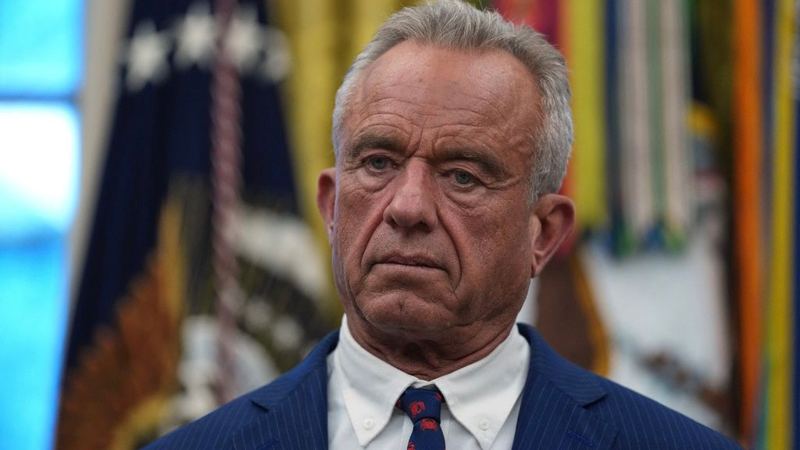
Health and Human Services Secretary Robert F. Kennedy Jr. and his cousin, former congressman Patrick Kennedy, announced a new mental health and addiction care initiative called Action for Progress. The program seeks to advance an executive order from President Donald Trump to coordinate a federal response to treat addictions as chronic diseases rather than acute conditions requiring emergency intervention alone.
The initiative aims to address the billions of dollars Medicaid spends annually on mental health and addiction treatment by implementing new payment structures, technology innovations, workforce development efforts, and interagency coordination. Patrick Kennedy criticized the current system, stating the country “never take[s] a holistic approach” and “never connect[s] all the different government agencies that touch someone with these illnesses.” He emphasized that treatment outcomes should be aligned with real-world factors such as stable housing, employment, and community connections.
Robert F. Kennedy Jr. noted that addiction and mental illness impose costs across multiple government systems beyond healthcare, including the justice system and foster care. He proposed switching the funding model to provide a single three-year payment to an accountable entity to oversee each person’s recovery and prevent relapse, which he argued would reduce overall care costs. Both Kennedys are in recovery themselves—the health secretary was addicted to heroin for 14 years starting as a teenager and has been clean for 43 years, while Patrick Kennedy has said he was addicted to alcohol and prescription painkillers during his time in Congress.
HHS announced a 100 million dollar investment supporting the Great American Recovery Initiative. The STREETS program will “fund targeted outreach, psychiatric care, medical stabilization and crisis intervention, while connecting Americans experiencing homelessness and addiction to stable housing.” HHS also announced a 10 million dollar grant program supporting adults with serious mental illness in court-ordered community-based treatment programs. According to the National Institute on Drugs and Addiction, about 46.3 million people in the United States have a substance use disorder, though only 6.3% received treatment in 2021.
This article is an AI-assisted summary. All facts and figures are drawn from the original report: https://spectrumlocalnews.com/us/snplus/health-and-medicine/2026/02/02/action-for-progress-mental-health-and-addiction-initiative-rfk-jr—dr—oz