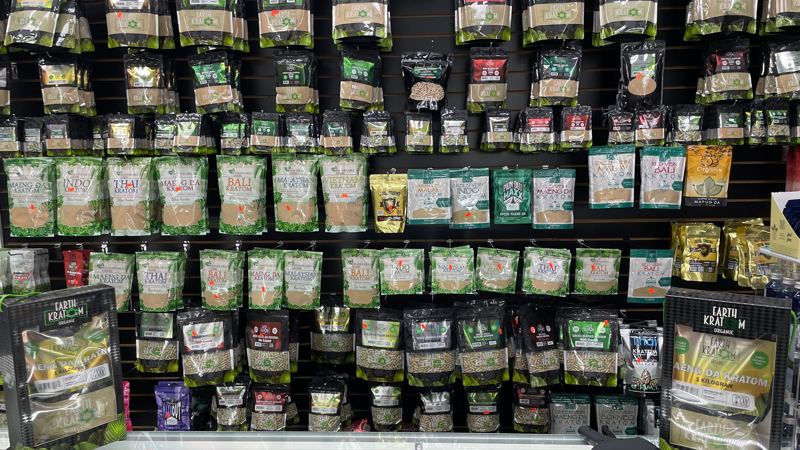
Since 2015, kratom poisonings have surged by 1,200%, according to a recent Centers for Disease Control and Prevention report. This explosion comes from a shift to highly concentrated synthetic versions of the traditional herbal remedy, particularly 7-hydroxymitragynine (7-OH) and mitragynine pseudoindoxyl, which doctors describe as dangerously potent.
Philadelphia emergency room physician Dr. Jeanmarie Perrone, who directs the Penn Center for Addiction Medicine and Policy, encountered a patient who appeared to be experiencing severe opioid withdrawal after using 7-OH. She administered buprenorphine (Suboxone), and his symptoms immediately resolved. “This really solidifies for me—eyes open—that this is really the same problem,” she said. Kratom originally came from southeast Asia, where people have used it for centuries as a herbal remedy with few-to-no fatalities. It first arrived in the U.S. in the early 2000s as a powder from dried leaves and quickly gained traction as a way to help people get off heroin or other opioids.
However, around 2015, vendors began producing “enhanced” kratom with concentrated 7-OH, a byproduct of mitragynine, the primary psychoactive alkaloid in kratom. This third wave produced even more potent derivatives like mitragynine pseudoindoxyl, which addiction psychiatrist Corneliu Stanciu characterizes as “highly potent—more potent than fentanyl.” Both 7-OH and mitragynine pseudoindoxyl are sold unregulated in multiple forms including tablets, capsules, liquid shots, tinctures, drinks, and candy. Stanciu said: “Currently, the market is basically a Wild West. You have everything out there being called kratom, even though it’s not kratom.”
This article is an AI-assisted summary. All facts and figures are drawn from the original report: https://whyy.org/articles/synthethic-kratom-explainer/