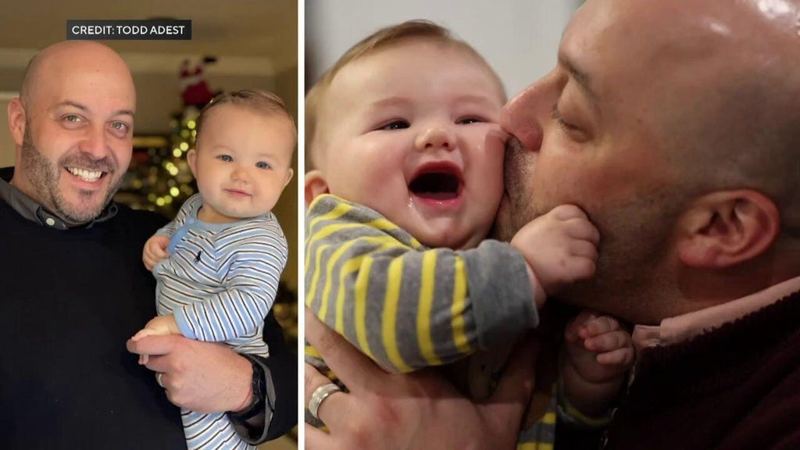
Mental health experts confirm that paternal postpartum depression is real and treatable, affecting 1 in 10 men. The condition is not a sign that fathers don’t love their babies or partners. Symptoms typically occur during the first year after birth, with higher risk when the mother is suffering from postpartum depression.
Todd Adest, a father of three sons ages 5 to 19, described his experience during the earliest days as “a lot of fear, there’s a lot of anxiety, there’s a lot of emotion, all wrapped up in one.” He struggled to establish his place within his new family, noting that the birth of a baby “takes away from intimacy. It takes away from affection, takes away from connection.” He described the challenge as dealing with a form of depression while trying to understand sleepless nights that had nothing to do with the baby crying.
Dr. Brett Biller, a psychologist at Audrey Hepburn Children’s House at Hackensack University Medical Center, notes that while there is little data on paternal postpartum depression, it is very real. Men experience hormonal changes including decreased testosterone, increased estrogen, and increased cortisol—which helps increase paternal caregiving and support. Paternal depression can impact child development: language development is slower, emotional development is impacted, and behavioral and emotional problems are correlated with perinatal depressive periods in fathers.
Depression affects fathers differently than mothers. The system is set up to support women, leaving men with limited institutional support. However, Biller emphasizes that as the condition becomes more recognized, so is the availability of help. Treatment options include medication, talk therapy, or both. Mental health difficulties should be treated the same as physical difficulties, with recognized correlation between the two.
Adest’s message emphasizes the importance of support and community. “Hope came from understanding that I wasn’t alone, that there were people who had been through what I was experiencing, and that there was support,” he said.
This article is an AI-assisted summary. All facts and figures are drawn from the original report: https://www.cbsnews.com/newyork/news/paternal-postpartum-depression-breaking-the-stigma/