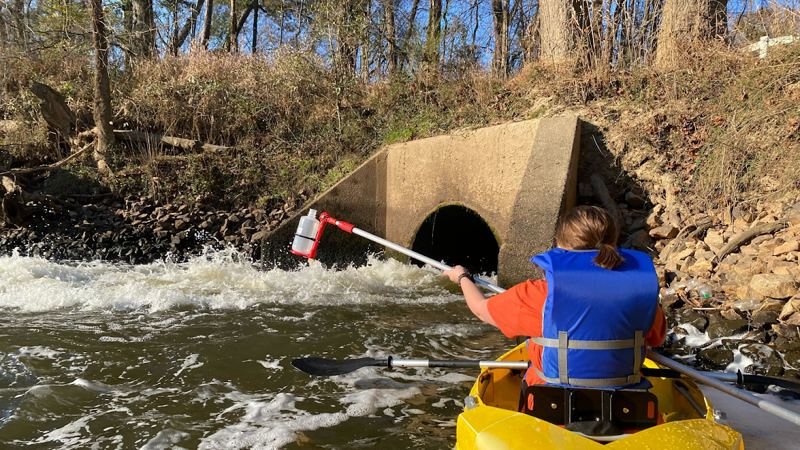
Researchers have found elevated levels of antidepressant drugs in North Carolina waterways, posing potential risks to aquatic wildlife and raising concerns about human health in communities that rely on these waterways for drinking water and agriculture.
A study published in ACS’ Environmental Science & Technology assessed water samples from four rivers near wastewater treatment plant outflows and an isolated lake in North Carolina. Researchers from the University of North Carolina at Chapel Hill, led by Erin Baker, determined levels of 34 antidepressant compounds in major medication categories, including selective serotonin reuptake inhibitors (SSRIs), selective norepinephrine reuptake inhibitors (SNRIs), and norepinephrine-dopamine reuptake inhibitors (NDRIs).
Water sampled downstream of treatment facilities contained 17 drugs or metabolites—substances created as the body breaks down the drugs—whereas samples taken upstream or in the lake were drug-free, except for one site. The concentrations of some contaminants well exceeded levels known to cause behavioral abnormalities and other toxicities in aquatic wildlife such as minnows and small crustaceans. The challenge stems from the fact that up to 90 percent of antidepressant drugs pass through the body into wastewater and are difficult to remove during water treatment.
The researchers noted that previous animal studies examined only short-term exposure to single drugs, so further studies of chronic and combined exposures are needed to understand the full ecological risks. Erin Baker emphasized the urgency of the situation, stating: “Findings from this study, along with others, reveal that pharmaceuticals are increasingly detected in waterways across the globe, especially near wastewater treatment plant discharge sites, posing a mounting environmental concern. Effective remediation strategies for these pharmaceuticals are urgently needed to eliminate them from wastewater and mitigate this escalating challenge.”
The team noted that these results have potential implications for human health because many tested waterways provide drinking water and are used for recreation and agriculture. Baker added: “Future research should prioritize broadening sampling efforts across global waterways to fully capture the scope of the issue. In addition, studies on effective remediation strategies for these pharmaceuticals are urgently needed to eliminate them from wastewater and mitigate this escalating challenge.” The research was funded by the National Institutes of Health, National Science Foundation, and cooperative agreements with the U.S. Environmental Protection Agency.
This article is an AI-assisted summary. All facts and figures are drawn from the original report: https://www.newswise.com/articles/monitoring-reveals-elevated-antidepressant-levels-in-some-waterways/?sc=rsla