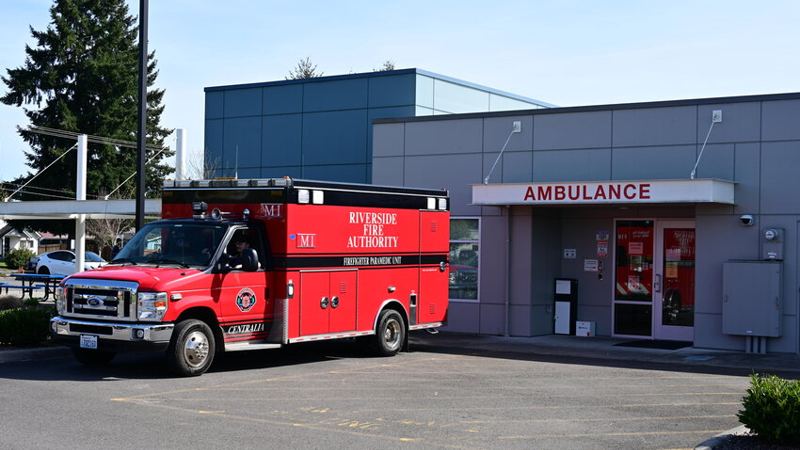
The Riverside Fire Authority and Cascade Community Healthcare have expanded a successful mental health crisis response pilot program countywide. A year-long pilot project allowed emergency responders in RFA’s service area to transport patients directly to Cascade’s Crisis Stabilization Unit in Centralia instead of hospital emergency departments. Based on the pilot’s performance, the Washington State Department of Health has granted permission to expand the project to all fire departments and EMS agencies throughout Lewis County, with countywide implementation expected by April 1.
The pilot program was initiated ahead of Cascade’s Crisis Relief Center opening in February. RFA Lieutenant Jason Shepherd, manager of the project, noted that the pilot “reduced time and streamlined their care” while allowing Cascade and RFA to “work out any issues” before the CRC’s launch. Previously, all 911 response patients transported by ambulance were driven to hospital emergency departments, where they were sometimes then transferred to Cascade for specialty care. The new model gets patients “experiencing a mental health crisis to the most appropriate care in the least amount of time,” according to Shepherd.
Crisis Care Infrastructure and Recovery Support
Cascade’s 18-bed Crisis Relief Center allows patients to stay up to 23 hours and 59 minutes, as outlined under state law. Upon arrival, patients receive a nurse assessment followed by mental health and psychological evaluations by mental health professionals, with immediate in-house lab work available. Mindy Greenwood, Cascade’s chief of inpatient services, noted that the organization’s “first goal is to get them out of their immediate crisis, surrounded by kindness and human compassion, which are both critical to their recovery.”
Following their initial stabilization, patients can remain at Cascade in a longer-term unit, where they receive three meals a day, showers, a bed, individual and group therapy, and medication management. Patients typically stay three to five days while staff develop a stabilization plan and connect them to needed community resources. Lewis County EMS Medical Program Director Dr. Peter McCahill emphasized that the program “provides benefits on so many levels,” most importantly allowing “eligible patients experiencing a mental health crisis direct access to a therapeutic environment” while helping address crowding in local emergency rooms.
This article is an AI-assisted summary. All facts and figures are drawn from the original report: http://www.chronline.com/stories/rfa-and-cascade-expand-mental-health-outreach-project-countywide,400087