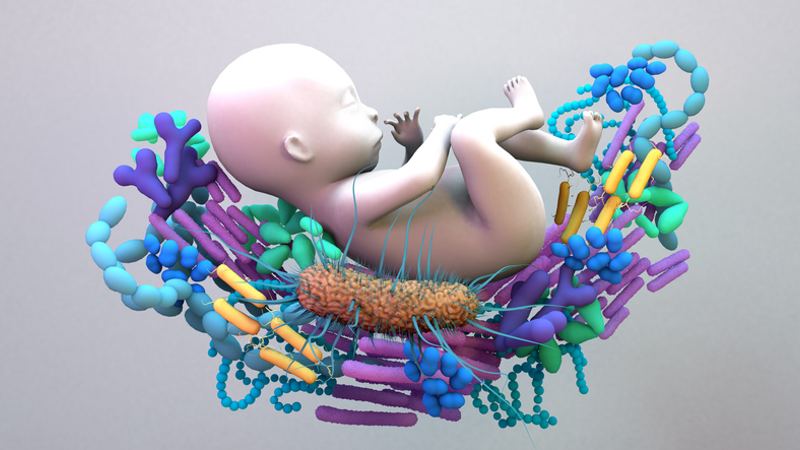
A new study from the Li Ka Shing Institute of Health Sciences at The Chinese University of Hong Kong reveals that the gut microbiome and epigenetics work together to influence neurodevelopment. Researchers found that epigenetic changes present at birth shape how an infant’s gut microbiome develops during the first year of life, with specific epigenetic patterns and gut microbes linked to signs of autism spectrum disorder (ASD) and attention-deficit/hyperactivity disorder (ADHD) when children reach three years old.
The research team, led by gastroenterologist Francis Ka Leung Chan, MD, characterized DNA methylation patterns from umbilical cord blood of 571 infants and paired this with gut microbiome data from 969 infants collected at two, six, and 12 months of age. Parental microbiome data came from the third trimester of pregnancy. When the children turned 36 months old, researchers used behavioral questionnaires to assess neurodevelopment and investigate links between the microbiome, epigenome, and early signs of developmental conditions.
Key Findings on Birth and Development
Infants born by Caesarean section showed different DNA methylation patterns in genes involved in immune responses and brain development. An infant’s epigenome at birth was associated with birth mode, length of gestation, having older siblings, and maternal allergies—but not with their parents’ gut microbiomes. Epigenetic modifications at birth were associated with increased susceptibility to neurodevelopmental conditions, though these effects were partly mediated by microbial colonization.
Protective Bacterial Species
The research identified specific bacteria that appear protective. Infants with epigenetic patterns associated with ASD were less likely to show signs of the disorder if they acquired Lachnospira pectinoschiza during their first year. Similarly, infants with ADHD-associated epigenetic patterns showed fewer signs if they acquired Parabacteroides distasonis. Co-senior author Hein Min Tun, PhD, noted, “A baby’s epigenetic setting at birth can influence their risk for neurodevelopmental disorders, but the presence of certain ‘good’ bacteria in their gut can step in and modify the risk.”
This article is an AI-assisted summary. All facts and figures are drawn from the original report: https://www.genengnews.com/topics/translational-medicine/epigenetics-at-birth-links-microbiome-to-neurodevelopment-potentially-asd-and-adhd/