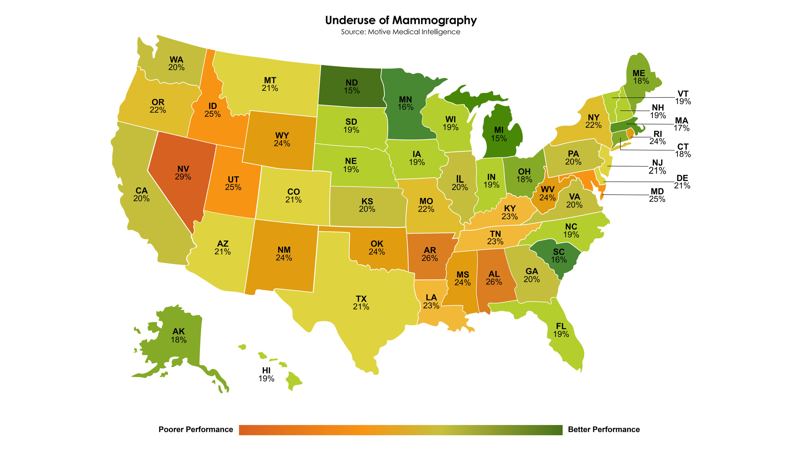
A new analysis of insurance claims data reveals that most women who need mammograms are receiving them, but significant geographic disparities persist in breast cancer screening rates. Among women in America, breast cancer is the second most common cancer and the second most prevalent cause of cancer death. The study, conducted by Motive Medical Intelligence, analyzed more than 100 million U.S. insurance claims to assess adherence to screening recommendations.
Screening Recommendations and Benefits
The U.S. Preventive Services Task Force recommends that women aged 40 to 74 receive a mammogram every two years, while the American Cancer Society urges annual screenings starting at age 40 for women at average risk. Estimates suggest that adherence to these recommendations could prevent 1.3 breast cancer deaths per 1,000 women screened. Early detection proves critical: among women with early-stage breast cancer, the 5-year survival rate exceeds 99 percent. Once breast cancer has spread, however, survival declines dramatically.
Geographic Disparities in Screening
State performance varies significantly, with North Dakota and Michigan leading with underuse rates of 15 percent each. In all, 19 states had good performance with underuse rates of 19 percent or less. The middle tier included states like Missouri, Oregon, and New York with 22 percent underuse rates. Arkansas, Alabama, and Nevada had the poorest performance, with underuse rates of 26 percent, 26 percent, and 29 percent respectively. The reasons for geographic variation remain unclear, though researchers point to sociocultural, environmental, and behavioral factors. According to Rich Klasco, M.D., Motive’s Chief Medical Officer, “Mammography is one of the most cost-effective tools we have for reducing breast cancer mortality. When eligible women are not screened, we lose the chance to detect breast cancer at its earliest and most treatable stage.”
This article is an AI-assisted summary. All facts and figures are drawn from the original report: https://www.prnewswire.com/news-releases/most-eligible-women-receive-mammograms-but-screening-gaps-persist-by-geography-302737640.html