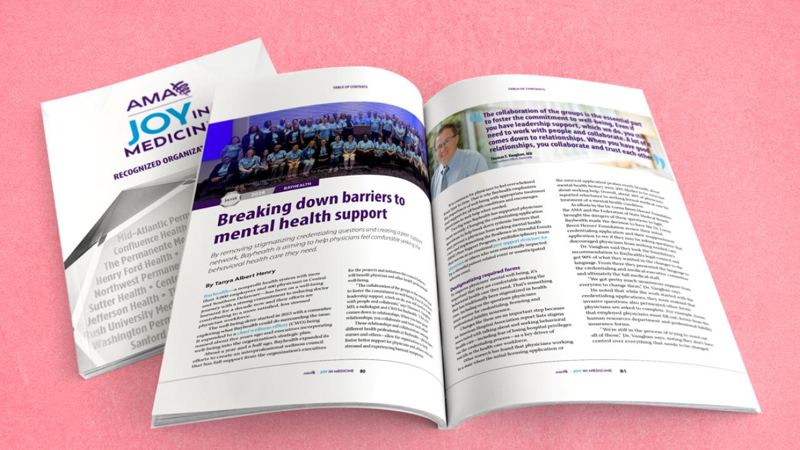
Bayhealth, a nonprofit health system with more than 4,000 employees and 400 physicians in Central and Southern Delaware, has spent a decade working to reduce physician burnout and improve well-being across its organization. The system’s well-being initiative started in 2015 with a committee exploring burnout reduction strategies and has since evolved into a comprehensive organizational commitment.
Organizational infrastructure supports wellness
About five years ago, Bayhealth named a chief wellness officer (CWO), and executives incorporated well-being into the organization’s strategic plan. About a year and a half ago, the system expanded efforts to create an interprofessional wellness council that has full support from leadership for projects and initiatives benefiting physician and other health professional well-being. Thomas E. Vaughan, MD, a radiologist and CWO for Bayhealth, emphasized the importance of collaboration: “The collaboration of the groups is the essential part to foster the commitment to well-being. Even if you have leadership support, which we do, you still need to work with people and collaborate…A lot of it comes down to relationships.”
Removing credentialing barriers and peer support
Bayhealth has taken two significant recent actions to support physicians. First, the system changed credentialing application questions to help break down systemic barriers that may prevent physicians from seeking mental health care. Second, it implemented the Resilience in Stressful Events (RISE) Peer Support Program, a multidisciplinary team serving as an emotional support structure for physicians emotionally impacted by stressful patient-related events or unanticipated adverse events. These changes address a persistent problem: research shows that physicians working in states where licensing applications probe overly broadly about mental health history are 20% likelier to be reluctant about seeking help. Overall, about 40% of physicians report reluctance to seeking formal medical care for treatment of a mental health condition.
Addressing stigma in health care
An American Hospital Association report identifies stigma associated with seeking behavioral health care—including fear of losing hospital privileges via credentialing—as a key driver of suicide in the health care workforce. Changing systemic barriers around credentialing and licensing questions is critical because it helps physicians feel comfortable seeking the behavioral health care they need without fearing professional consequences.
This article is an AI-assisted summary. All facts and figures are drawn from the original report: https://www.ama-assn.org/practice-management/physician-health/breaking-down-barriers-mental-health-support