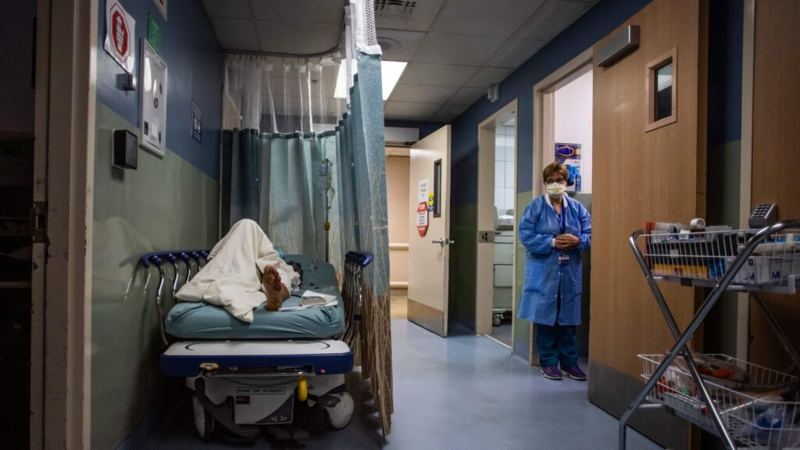
Emergency room hallway beds have become a pervasive and worsening national crisis as more patients spend longer times in the ER waiting for an open hospital bed. The number of ER visits in the United States rose from 128.97 million in 2010 to 155.4 million in 2022, while hospitals struggle with rising occupancy rates and fewer available beds. ER physicians increasingly must convert hallways and corners into makeshift treatment zones, forcing staff to question and compromise their standards and ideals.
An ER physician describes the moral dilemmas this creates. Cara M., a patient suffering from a severe migraine, is parked in a gurney along a bright, busy, and noisy hallway rather than in a quiet, low-lighted room—the standard care for such a condition. Another patient, an older woman in a hallway bed calling for help, illustrates how patients become both exposed to full view of others and paradoxically invisible. A physician must break news of abdominal masses likely indicating malignancy in a hallway bed where the patient’s raw, insuppressible tears are witnessed by passersby.
Diagnostic and Ethical Challenges
Hallway beds transform the patient examination into a moral dilemma. Exposing the patient is critical for diagnosis, yet in a hallway, exposure competes with the duty to honor patient privacy and dignity. One physician missed a telling flank bruise in an elderly patient because she calculated the odds of finding anything slim and not worth risking exposure in the hallway. Research shows patients in hallway beds are less satisfied with their care and at greater risk for diagnostic error and suboptimal history taking, especially when addressing suicidal ideation, intimate partner violence, and elder abuse.
Broader Healthcare System Failure
Primary care, the foundation of the health care system, is crumbling under high workloads, endless bureaucratic obstacles, poor reimbursement, and burnout. When Cara M.’s headache intensified and she couldn’t keep her medications down, her overbooked physician group told her to go to the ER—one of three weeks before an appointment was available. In the post-pandemic period, the number of patients who left without being seen by a physician increased sixfold.
Hallway beds bear an undeniable human weight. The effort to provide unflinching focus on each patient represents an act of resistance against systems that distance experience behind rationalizations and numbers.
This article is an AI-assisted summary. All facts and figures are drawn from the original report: https://www.statnews.com/2026/03/18/er-hallway-beds-boarding-harm/