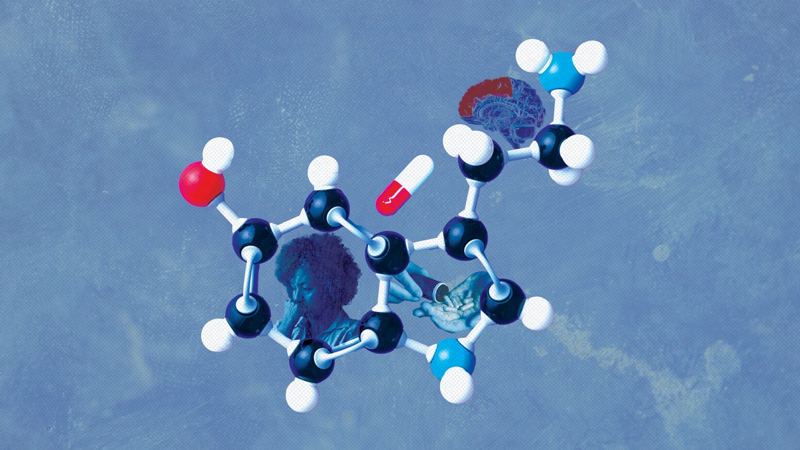
The serotonin hypothesis of depression—the idea that a lack of serotonin in the brain causes mental illness—has become increasingly controversial among researchers despite decades of centrality in psychiatric treatment. A 2022 review published in Nature concluded there was “no consistent evidence of there being an association between serotonin and depression,” analyzing studies measuring serotonin levels through blood metabolites, brain imaging of serotonin receptors, and transporter proteins. The review sparked significant backlash, with 35 researchers publishing a counter-argument in Molecular Psychiatry. However, more recent research has supported aspects of the serotonin hypothesis: a study using positron-emission tomography (PET) scans found that people experiencing major depressive episodes released less serotonin than healthy controls when given a drug that boosts serotonin, though the study involved only 17 patients.
Despite ongoing debate about serotonin’s role, selective serotonin reuptake inhibitors (SSRIs) remain the most prescribed psychiatric medications in the United States today. Researchers estimate that at least 30% of people with depression do not respond to various types of SSRIs, suggesting that factors outside the serotonin system play significant roles. A major challenge in measuring serotonin is that the brain’s neurochemical systems operate as an interconnected web; adding or removing one neurochemical sets off a cascade of events difficult to attribute to a single system. Of the body’s serotonin, just 2% is located in the brain, while 8% is in blood platelets and the remaining 90% is in the gut.
Recent research points to the gut microbiome as a potential pathway to mental illness. A 2016 study transplanted microbiota from people with depression into rodents and observed behavioral changes linked to depression, suggesting bidirectional communication between gut bacteria and mood. A 2025 study found that increasing serotonin levels in the gut epithelium in rodents was associated with reduced symptoms of anxiety and depression. Clinically, case reports show fecal microbiota transplant (FMT) has reduced depression and bipolar disorder symptoms in some patients, and clinical trials are underway testing FMT effectiveness for depression and obsessive-compulsive disorder, though large-scale studies remain lacking.
Newer antidepressant treatments including psychedelics and ketamine also connect to serotonin systems, strengthening arguments for the neurotransmitter’s importance. Long-term SSRI use has been associated with increased brain-derived neurotrophic factor (BDNF), a protein promoting neural plasticity. Psychedelic treatments such as psilocybin directly target serotonin receptors, while ketamine increases glutamate activity, which boosts extracellular serotonin. These findings suggest the primary antidepressant mechanism may operate through neuroplasticity rather than serotonin reuptake alone.
This article is an AI-assisted summary. All facts and figures are drawn from the original report: https://cen.acs.org/pharmaceuticals/neuroscience/ssris-mental-health-debate/104/web/2026/03?sc=230901_cenrssfeed_eng_latestnewsrss_cen