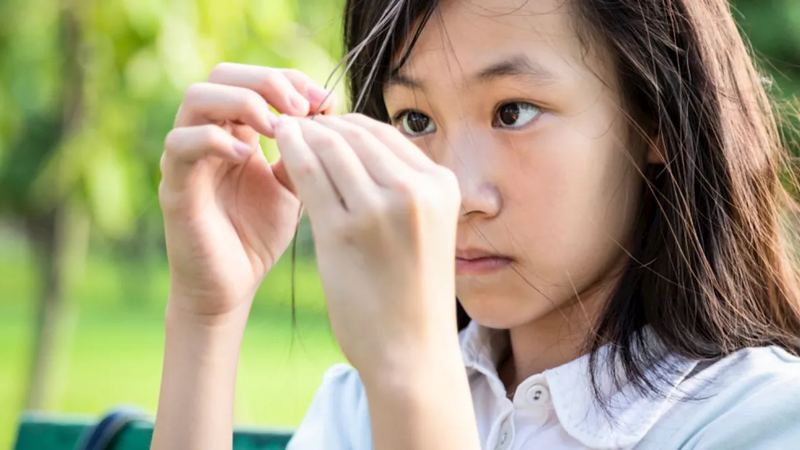
Compulsive hair-pulling, known as trichotillomania, is alarming for parents but is not inherently dangerous. However, when hair is swallowed, serious medical complications can occur. A lesser-known condition called trichobezoars—a mass of hair that accumulates in the stomach after hair has been swallowed—represents a rare but significant risk for individuals who engage in both hair-pulling and hair-ingestion behaviors.
Understanding Trichobezoars
Trichobezoars are rare; approximately 30 percent of those with trichotillomania engage in swallowing hair, and only 1 percent of those individuals develop a trichobezoar that requires surgical extraction. Human hair cannot be digested. When swallowed repeatedly, strands of hair can collect in the stomach and gradually become compacted into a dense mass. In some cases, the hairball can grow large enough to extend from the stomach into the intestines, a rare condition sometimes referred to as Rapunzel syndrome.
Trichobezoars require medical treatment and are often discovered only after symptoms develop. Not everyone with hair-pulling swallows hair, and the majority of people with trichotillomania never develop a trichobezoar. However, for individuals who do engage in trichophagia, the risk increases over time.
Treatment and Support
Because hair masses are tightly compacted, they usually cannot be dissolved or passed naturally. Treatment often requires removal through endoscopy or surgery, depending on the size and location of the bezoar. Medical treatment addresses the physical complication, but psychological treatment remains essential to prevent recurrence.
When trichophagia is present, treatment focuses not only on hair-pulling but also on the behavioral sequence surrounding hair after it is pulled. This includes increasing awareness of pulling and hair-handling behaviors and changing environmental factors that lead to the behavior. Parents should approach conversations about hair-eating without alarm or correction that might increase shame. Awareness and evidence-based care help children learn healthier ways to regulate urges and feel more comfortable in their own bodies.
This article is an AI-assisted summary. All facts and figures are drawn from the original report: https://us.headtopics.com/news/hair-pulling-and-trichobezoars-what-parents-should-know-80765874