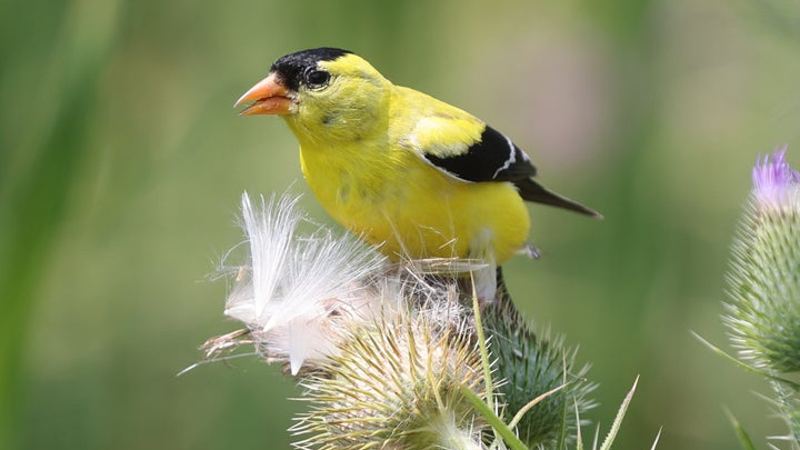
A Canadian study published in the Journal of Neuroscience found that expert birdwatchers show structural brain differences compared to novices, particularly in areas related to attention and visual perception. The research suggests that developing expertise in birding may help protect against age-related cognitive decline.
Study Design and Findings
The study involved 58 participants divided into two groups. The expert group consisted of 29 people, ages 24 to 75, recruited from the Toronto Ornithological Club and Ontario Field Ornithologists. The novice group comprised 29 people, ages 22 to 79, recruited from the same birding groups and outdoor activity groups focused on hiking and gardening. All participants underwent diffusion-weighted MRI scans to assess structural brain differences.
The expert group showed lower “mean diffusivity,” or MD, in certain brain areas compared to novices. Lower MD indicates greater tissue density and increased structural complexity. According to the study, expert birdwatchers demonstrated a “potential attenuation of age-related decline” in these regions. The lower MD was also associated with higher bird identification accuracy. When performing tasks matching and identifying local and nonlocal bird species, the brain areas showing lower MD in experts were actively engaged “when experts judged less-familiar nonlocal (vs. local) birds.”
What Expertise Involves
Erik Wing, a lead author, explained that birding combines “fine-grain identification, visual search and attention to the immediate environment and sensitivity to motion, pattern detection, building these elaborate conceptual networks of different related species.” Wing cautioned that the study could not prove a causal link between positive brain changes and birding experience, though he noted that “people who have spent years learning to identify birds show differences in both brain structure and brain activity — especially in regions that support attention and visual recognition.”
Wing indicated that similar brain changes have been associated with expertise in “fields ranging from music to chess to ‘sports’ in the broadest sense (dancing to juggling).” Research published in 2023 found that middle-aged and older adults who took adult education classes had a 19% lower risk of developing dementia within five years compared to those who did not take classes. Dr. Emer MacSweeney, a consultant interventional neuroradiologist not involved in the study, called for future research comparing different types of expertise and exploring how lifestyle factors interact with domain-specific training.
This article is an AI-assisted summary. All facts and figures are drawn from the original report: https://www.huffpost.com/entry/birdwatching-protects-brain-health_n_69a71fb4e4b076ac5d63f8f8