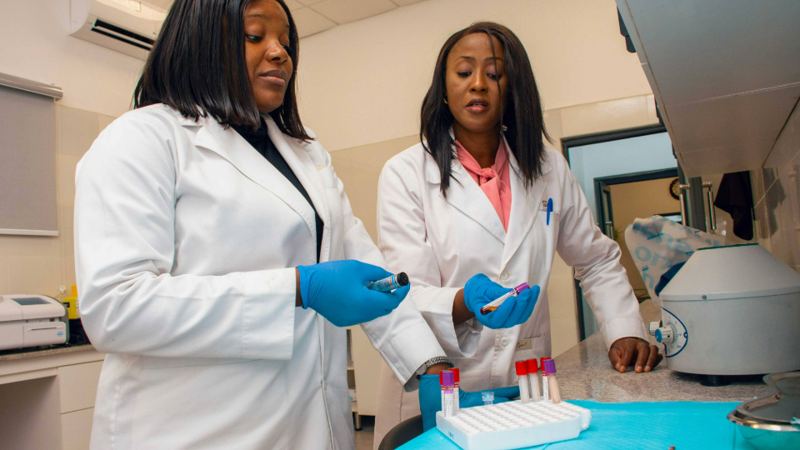
A research consortium led by the University of Liverpool has received funding to tackle noma, a severe gangrenous disease of the mouth and face that primarily affects malnourished young children in regions of extreme poverty, mostly reported in Africa. Noma starts as an inflammation of the gums which, if left untreated, spreads rapidly to destroy facial tissues and bones, frequently leading to death and severe disfigurement in survivors. The World Health Organization added noma to its official list of neglected tropical diseases at the end of last year.
The PathNoma alliance, led by Dr Stuart Ainsworth from the University’s Department of Infection Biology and Microbiomes, has been awarded funding by Hilfsaktion Noma e.V., a nonprofit organization that provides medical care to noma survivors through treatment centers in Niger, Guinea Bissau, and Nigeria. The consortium also includes researchers from Liverpool School of Tropical Medicine’s Centre for Neglected Tropical Diseases, ISGlobal, the CaixaResearch Institute, and Médecins Sans Frontières (MSF).
Research Goals and Prevention Efforts
The funding will enable the team to investigate the microbiology and immunopathology of noma to better understand the disease’s fundamentals. Dr Ainsworth stated that the research will “pinpoint which bacteria drive the disease, whether it’s caused by a single species or several acting together, and to understand its interaction with the immune response.” This knowledge could help develop early screening tools to identify noma in its earliest stages. Professor Adam Roberts from LSTM’s Centre for Neglected Tropical Diseases emphasized that “understanding the bacteria involved and how the body’s immune system responds is essential to finding ways to prevent and stop this disease in its earliest stages.” MSF, which has been supporting the Noma Children Hospital in Sokoto for more than 10 years, will focus on prevention, increasing screening activities, and participating in the PathNoma study, hoping the findings will improve early detection and prevention.
This article is an AI-assisted summary. All facts and figures are drawn from the original report: https://news.liverpool.ac.uk/2026/03/04/funding-awarded-to-tackle-a-neglected-tropical-disease/