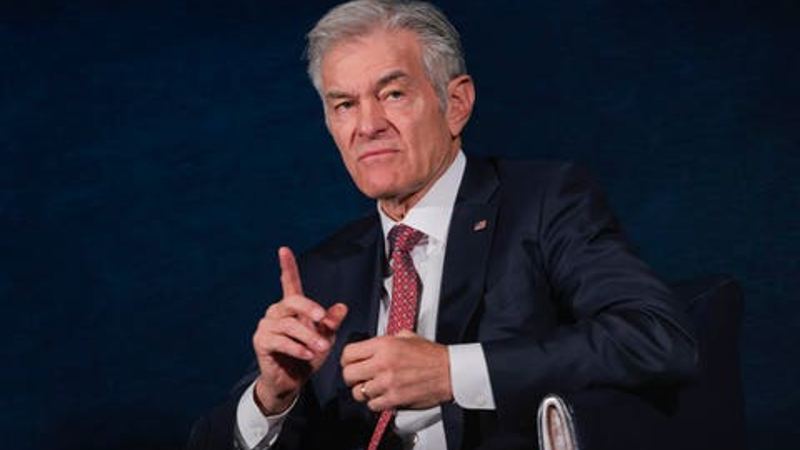
Health and Human Services Secretary Robert F. Kennedy Jr. and Centers for Medicare and Medicaid Services Administrator Mehmet Oz announced an “Action for Progress” initiative to address addiction and mental health, following a White House plan dubbed the Great American Recovery Initiative. However, the administration’s approach presents a contradiction: it has rolled back $2 billion in federal funding for mental health and addiction programs while announcing new initiatives to combat the addiction epidemic.
Announced Initiatives and Unclear Funding
The Trump administration’s plan seeks to treat addiction as a medical condition rather than a moral failure and pledges to coordinate responses among federal agencies. The initiative includes a program to improve access to methadone, buprenorphine, and naloxone for treating opioid use disorder, and aims to connect homeless drug users to housing, employment, and long-term recovery. However, the initiatives are murky on details, especially regarding funding and implementation. The plans appear to duplicate the work of an already existing White House drug policy office established 37 years ago, and some elements resemble Biden administration initiatives. Kennedy emphasizes faith-based approaches to recovery, stating that “when we cut off our relationships with other human beings, we lose that access to the divine, and that is a healing power.”
Contradictions with Funding Cuts and Staff Reductions
The Trump administration has simultaneously decimated the Substance Abuse and Mental Health Services Administration (SAMHSA), the federal agency that funds and oversees addiction treatment. SAMHSA has lost most of its senior leadership and more than half its staff to attrition and layoffs. Between 2022 and 2023, fatal overdoses dropped 14.5%, with an estimated 80,391 drug overdose deaths in 2024—a decrease of 26.9% from 110,037 deaths recorded in 2023. Experts suggest that harm reduction policies the Biden administration pursued may have contributed to this improvement. The Trump administration has also rescinded a Biden-era final rule that strengthened mental health parity requirements, which were designed to ensure health insurers treat mental health and substance use disorder care the same as other medical benefits. According to Biden administration studies, less than 50% of adults with mental illness were able to access care in 2020, while nearly 70% of children cannot receive covered treatment.
Long-Standing Barriers to Parity
The Mental Health Parity and Addiction Equity Act, passed in 2008, aimed to prevent health insurers from imposing more restrictions on mental health and substance use disorder benefits than on other medical benefits. Despite this law, a 2019 Milliman report found increasing disparities in provider payments and network adequacy between physical and mental health. The rescission of the Biden-era rule and elimination of funding represent a reversal of decades of advocacy beginning with former First Lady Rosalynn Carter nearly 50 years ago to remove stigma and achieve mental health parity.
This article is an AI-assisted summary. All facts and figures are drawn from the original report: https://www.forbes.com/sites/joshuacohen/2026/03/04/kennedy-and-oz-address-addiction-epidemic-but-policy-details-are-murky/