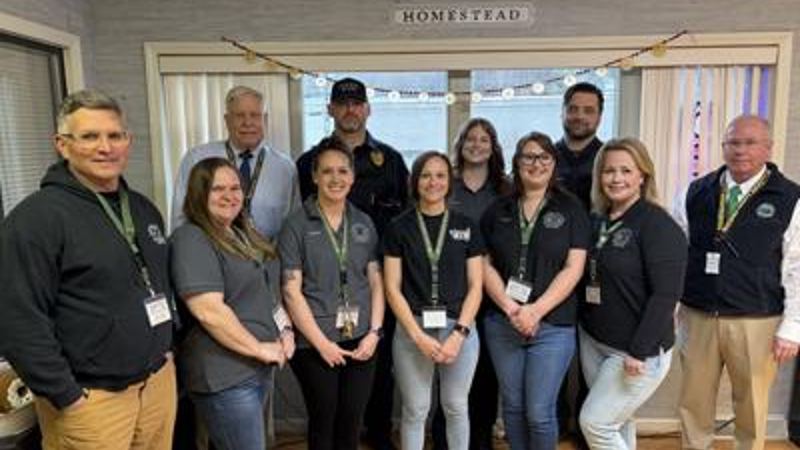
A new partnership between the Watauga County Sheriff’s Office, the Boone Police Department, and the Mediation and Restorative Justice Center/Homestead Recovery Center is strengthening local response to behavioral health crises and substance use-related incidents. The program, launched on Feb. 16, brings law enforcement and trained peer support specialists together to better respond to people experiencing mental health crises, substance use emergencies, or other urgent social needs.
Program Structure and Operation
The partnership combines daytime municipal co-response with countywide mutual aid coordination and after-hours peer coverage. During daytime hours, eligible calls are handled by Boone Police Department’s co-response team—Officer Delaney and HRC Embedded Peer Support Christian Gregson—through a mutual aid agreement, with additional support from Homestead Recovery Center’s Peer Response Team as needed. After hours and on weekends, the Peer Response Team provides coverage to both law enforcement agencies. A week into implementing after-hours coverage, the peer support team had responded to two after-hours calls.
Response Model and Community Impact
Peer support specialists respond to incidents where individuals are experiencing mental health crises or struggling with substance use with no immediate safety threat requiring enforcement action. Law enforcement responds first to ensure scene safety, while peer specialists engage the individual to listen, help with regulation, and discuss short-term goals and available support. This could include connecting people with outpatient treatment, recovery housing, counseling services, transportation, or helping create safety plans. According to Boone Police Chief Daniel Duckworth, trained peer support specialists responding alongside law enforcement increase the likelihood that individuals will accept services, connect to treatment, and receive meaningful follow-up support, potentially reducing repeat calls over time.
Distinctive Features and Leadership
What distinguishes this peer-led model is that trained peer support specialists with lived experience are central to response, rather than clinician-based approaches or daytime-only programs. According to Homestead Recovery Center Director Mollie Bolick, lived experience helps build trust quickly and makes individuals more willing to engage voluntarily with support. Watauga County Sheriff Len Hagaman noted the partnership represents a unique and innovative crisis response model that “enhance[s] our ability to safely move beyond a traditional enforcement response and provide individuals in crisis with professional care, dignity, and meaningful assistance.” Funding comes from the Center for Disaster Philanthropy, the Truist Foundation, and the Western NC Recovery and Resiliency Fund.
This article is an AI-assisted summary. All facts and figures are drawn from the original report: https://www.wataugademocrat.com/news/local/meet-people-with-care-local-agencies-partner-to-expand-behavioral-health-crisis-response/article_96c1052c-a421-41a9-a570-c94cfe507609.html