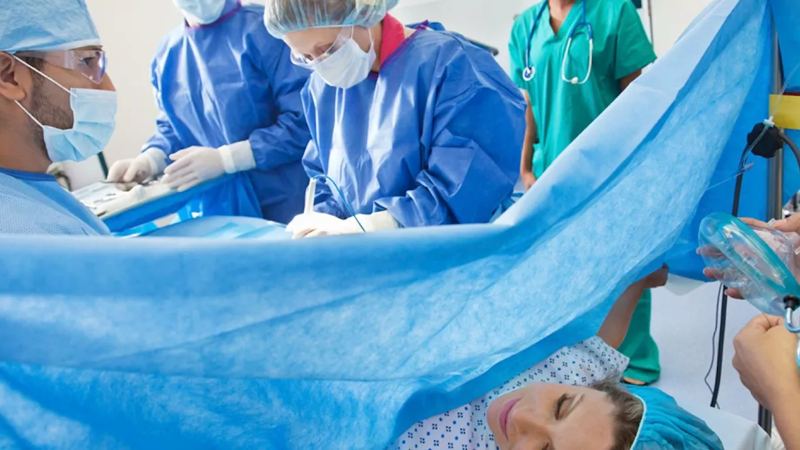
An unscheduled cesarean section significantly increases a woman’s risk of developing acute stress, according to new research from the Stress Disorder Research Program at Massachusetts General Hospital. Researchers surveyed 1,146 women within two days of birth and followed up with 70% of these patients within two years. Overall, one out of ten mothers met criteria for clinically acute stress from the birth experience.
However, the rates were substantially higher for women who underwent an unscheduled cesarean. In that group, 26.6% reported clinical stress symptoms, and rates were even higher when the cesarean was performed during labor. Compared to vaginal delivery, women having an unscheduled C-section were found to be four times more likely to be at risk for acute stress. Approximately 1.1 million cesarean sections are performed yearly in the United States, accounting for about one-third of all births. Of these, approximately one in five women experiences an unscheduled cesarean during active labor, often due to concerns about the fetus or labor not progressing.
Researchers found that women who undergo unplanned cesarean sections often experience significant trauma during the delivery. Nina Sherman Green described her emergency cesarean experience: “I was definitely scared, and definitely felt very alone, even with having fifteen, twenty people in that operating room. It was a major trauma, definitely a very scary moment.” When told her husband could not be in the operating room, she said, “that really sucks. I wanted a healthy baby but I really wanted my husband to be a part of that experience.”
Professor Dekel urges clinicians to screen “in real time” for the patient’s birth experience and potential birth-related trauma. Women may need additional support or screening for post-traumatic stress symptoms after birth. Dekel recommends that women prioritize their mental and physical health and focus on receiving “trust, support, empathy, and empowerment” during birth. Having a support person in the delivery and recovery room—whether a partner, doula, or loved one—can enhance support and care. Maternity wards and birthing centers should implement trauma-informed care practices and follow up with patients upon their return home to check on their emotional well-being.
This article is an AI-assisted summary. All facts and figures are drawn from the original report: https://us.headtopics.com/news/an-unscheduled-c-section-can-increase-the-risk-of-clinical-79634418