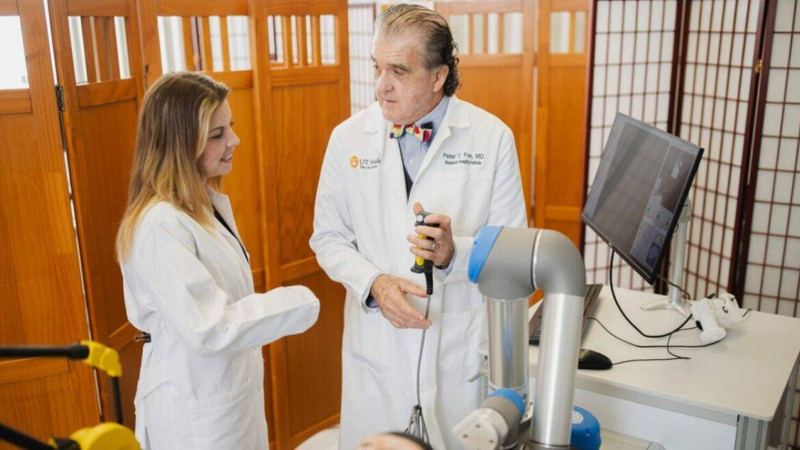
Researchers at UT Health San Antonio have reported significant findings for treating combat-related post-traumatic stress disorder (PTSD) using an advanced form of brain stimulation. A randomized clinical trial published in JAMA Network Open examined navigated transcranial magnetic stimulation (TMS)—an MRI-guided, robotic-controlled procedure—combined with intensive psychotherapy for active military personnel and veterans with combat PTSD.
The study enrolled 119 active-duty military and veteran participants, with 92% presenting with severe or extremely severe conditions. Participants completed a 30-day residential program at Laurel Ridge Treatment Center in San Antonio. One group received navigated TMS for 20 consecutive days alongside the highest level of psychotherapy for PTSD; the other received sham TMS (a procedure resembling treatment but delivering no therapeutic effect) with the same psychotherapy.
Results demonstrated significant superiority for active TMS treatment. One month after completion, 85% of those receiving active navigated TMS showed significant symptom relief both in self-reported measures and clinically assessed outcomes, compared to just under 60% in the sham group. At three-month follow-up, 73% in the active TMS group maintained clinically significant improvement compared to less than 30% in the sham group.
PTSD affects an estimated 4% to 17% of nearly 3 million U.S. military personnel who deployed to Iraq and Afghanistan, translating to roughly 500,000 individuals. Combat PTSD has proven more difficult to treat than civilian PTSD. While trauma-focused cognitive-behavioral therapies, including prolonged exposure (PE), are effective, they have high dropout rates.
TMS is already FDA-approved for major depressive disorder and obsessive-compulsive disorder. An electromagnet placed on the scalp generates pulsing magnetic fields that induce electrical currents in underlying brain tissue, engaging and modifying brain networks implicated in mental health disorders. The navigated TMS system developed by Dr. Peter T. Fox uses MRI and robotic technology to guide placement of the device to the exact target based on each person’s unique brain anatomy and structure.
The Consortium to Alleviate PTSD (CAP), a multi-institutional network jointly funded by the Department of Defense and Department of Veterans Affairs, led this research as part of broader efforts to improve PTSD prevention, diagnosis, and treatment.
This article is an AI-assisted summary. All facts and figures are drawn from the original report: https://news.utsa.edu/2026/04/researchers-report-breakthrough-findings-significantly-reducing-symptoms-for-combat-ptsd-victims/