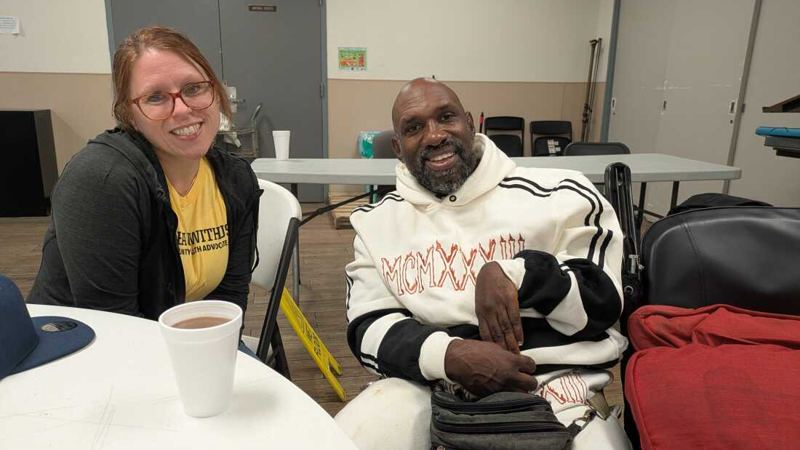
Dr. Elyse Stevens, a primary care and addiction medicine doctor in New Orleans, built a reputation for taking on complex medical cases including people battling addiction for decades. Some patients were chronic-pain patients on high doses of opioids, others were sex workers and people living on the street. Stevens regularly attended 6 a.m. breakfasts for homeless people, volunteered at homeless shelter clinics on Saturdays, and on Monday evenings visited an abandoned Family Dollar store where advocates distributed supplies to people who use drugs.
About four years ago, Stevens met Charmyra Harrell limping with a right leg swollen and covered in sores. Emergency room doctors had repeatedly dismissed her, so Harrell used street drugs to ease the pain. Stevens cleaned her sores on Mondays for months until persuading Harrell to visit the clinic at University Medical Center New Orleans, where Stevens discovered Harrell had diabetes and cancer. Stevens agreed to prescribe pain medication—an option many doctors would dismiss for fear a patient with a history of addiction would misuse it. Harrell recounted, “I’m no longer on cocaine,” after Stevens told her, “You cannot do drugs and do your pain meds.”
Stevens’ approach to patient care won her awards and nominations in medicine, community service, and humanism. Rather than seeing patients in binaries—addicted or sober, with positive or negative drug tests—she measured progress on a spectrum: showering daily, cooking with families, using less fentanyl than before. However, in summer 2024, her supervisors started questioning her approach, expressing concerns about prescribing too many pain pills, mixing opioids and controlled substances to the same patients, high doses of buprenorphine, and not doing enough urine drug tests.
The hospital’s chief medical officer wrote that “her prescribing pattern appears unconventional compared to the local standard of care.” In May 2024, the hospital’s review committee determined Stevens’ practices fell “outside of the acceptable community standards” and constituted “reckless behavior.” In March 2024, Stevens’ supervisors told her to stop coming to work, and hundreds of her patients were moved to other providers without transition planning. In October 2024, Stevens moved to the Virgin Islands to work in internal medicine. The Louisiana state board’s investigation into Stevens remained ongoing as of late December with no action taken against her license.
This article is an AI-assisted summary. All facts and figures are drawn from the original report: https://www.npr.org/sections/shots-health-news/2026/01/05/nx-s1-5660694/addiction-treatment-opioids-cocaine-abstinence