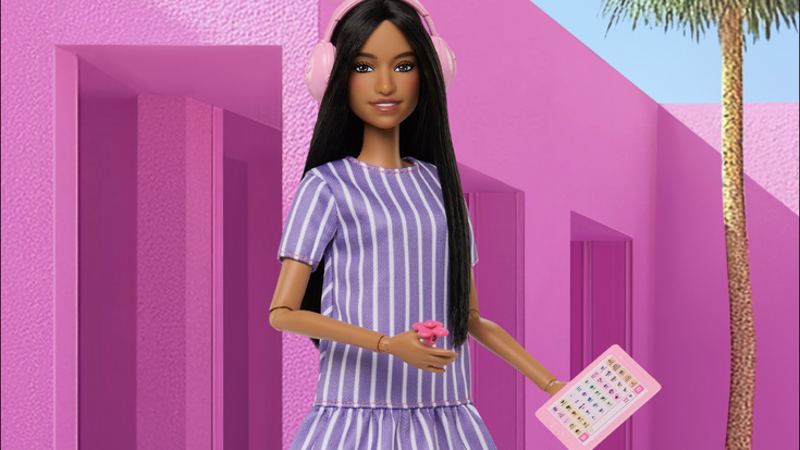
Mattel has released an autistic Barbie doll developed over 18 months in partnership with the Autistic Self Advocacy Network. About 1 in 31 children and 1 in 45 adults has autism, with boys nearly four times more likely to be diagnosed than girls according to Autism Speaks.
The doll comes equipped with noise-canceling headphones, a pink tablet for communication, a fidget spinner for stress reduction and focus, and wrists and elbows that allow for stimming and hand flapping—body movements some autistic people use to process sensory information or express excitement. The doll also features an averted gaze that reflects how some members of the autistic community may avoid direct eye contact. ASAN said it hoped the Barbie would demonstrate that “all kids that autistic people are a valuable part of our communities.”
Experts have largely responded positively. Geraldine Dawson, founding director of the Duke Center for Autism and Brain Development, told ABC News that autistic children often feel excluded due to differences and that “having a doll that represents their personal experiences sends a message that they are valued and included.” She noted this can play an important role in developing positive identity and self-esteem, potentially buffering autistic children from mental health problems such as depression, which are common among this population.
Eileen Lamb, senior director of social media and marketing for Autism Speaks and herself autistic with two autistic children, told CNN that while it is not “possible to represent the entire spectrum in one doll,” the new Barbie represents “a great step.” Social media reactions have been mixed, with some autistic users questioning whether the specific features accurately represent all autism experiences, while others praised the doll as validating accessibility needs like AAC devices, headphones, and other aids used by many autistic individuals.
This article is an AI-assisted summary. All facts and figures are drawn from the original report: https://www.phillyvoice.com/autistic-barbie-doll-reaction/