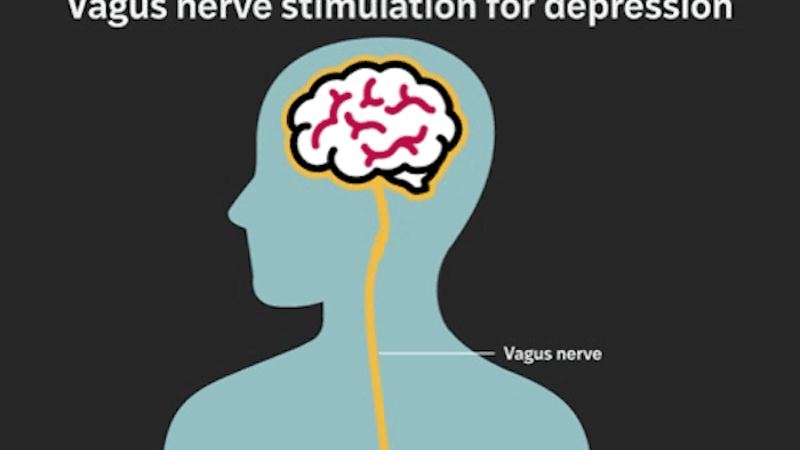
About 20% of U.S. adults experience major depression in their lifetime, and up to one-third of patients develop treatment-resistant depression, for which standard antidepressant medication or psychotherapy proves insufficient. A new study published January 13 in the International Journal of Neuropsychopharmacology shows that vagus nerve stimulation (VNS) through an implanted device may provide substantial, long-lasting relief for the most severe cases.
Researchers at Washington University School of Medicine supervised the large, multicenter RECOVER trial examining patients with severe treatment-resistant depression. On average, each of the 214 patients receiving active treatment had already tried 13 treatments that failed, including electroconvulsive therapy and transcranial magnetic stimulation, and had experienced depression for 29 years. Three-quarters of participants were unable to work due to their illness. The VNS Therapy System involves implanting a device under the skin in the chest that emits electrical pulses to the left vagus nerve. Of the 214 patients receiving active treatment from the trial’s beginning, approximately 69%, or 147 people, had meaningful improvements at 12 months. Among those experiencing meaningful benefit at one year, more than 80% maintained or increased benefits at 24 months across all measures of depression, quality of life, and function. Among those with substantial response at one year—defined as 50% or greater symptom reduction—92% typically still experienced benefits at the two-year mark.
Notably, nearly one-third of participants who showed no response after one year reported benefits at the two-year mark, suggesting treatment may require more time in some patients. More than 20% of treated participants, or 39 people, achieved remission after 24 months, meaning symptoms improved to allow normal daily functioning. Relapse rates remained consistently low among those who experienced benefits at one year. The trial aims to gather data to inform U.S. Centers for Medicare & Medicaid Services coverage decisions, which could make the treatment available to many more patients currently unable to access it due to cost.
This article is an AI-assisted summary. All facts and figures are drawn from the original report: https://www.newswise.com/articles/implant-provides-lasting-relief-for-treatment-resistant-depression/?sc=rsla