Mental health services in rural Northeastern Nevada have become increasingly accessible through insurance coverage, telehealth, and crisis response teams, according to two licensed clinical social workers who spoke at a public discussion at the Carlin Municipal Courthouse.
Michelle Sandoval, a licensed clinical social worker with more than a_ years of experience in Nevada, and Aimee Fitch, a Nevada clinical social worker specializing in rural communities, discussed options available to residents who may struggle to access care because of distance, cost, or stigma. Sandoval noted that a major shift occurred about five years ago, when mental health services were formally recognized as medical services for insurance purposes. “Thankfully, mental health services were identified as medical services, so insurance does cover any mental health services just like they would medical appointments,” Sandoval said. She explained that co-pays typically range from $a to $c_, with insurance covering the remainder, including psychiatric hospitalization when necessary.
Expanded Access and Telehealth Options
Telehealth has expanded access to specialized care once limited to urban areas, Sandoval said. “I really highly suggest somebody looking for mental health services to go online and do a Google search for telehealth services in Nevada,” she said. “There are some amazing specialists that may be specialize in trauma or PTSD or bipolar that we now have access to in Vegas because of telehealth.”
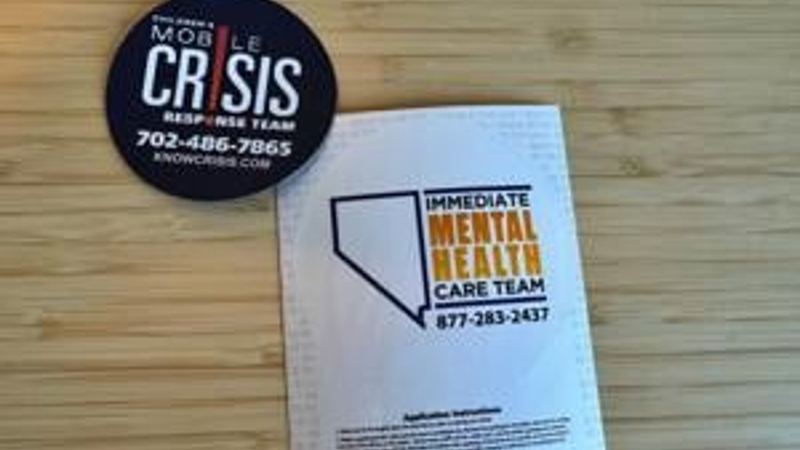
Many providers offer appointments during lunch hours, making care more accessible for working adults. Fitch highlighted free crisis-response services available to rural residents, including Children’s Mobile Crisis Services and the adult Immediate Care Team. “Our rural Children’s Mobile Crisis and our adult Immediate Care Team — those are ac/f hotlines that can be used by anyone, and they’re no cost to individuals using the programs,” Fitch said.
Crisis Support and Early Intervention
Licensed clinicians are on call seven days a week to respond to crisis situations or help individuals manage difficult periods, Fitch said. Case management services are also available to help people connect with ongoing care. Sandoval emphasized that a mental health crisis does not necessarily involve immediate danger. “Crisis is defined by the individual,” she said. “It doesn’t have to be suicidal, it doesn’t have to be homicidal, it doesn’t have to be an active psychotic episode. If someone is so sad that they’re having a hard time getting out of bed, that could be a crisis to them.”
Early intervention can help prevent more serious situations, particularly for children. “Your child’s being bullied at school and you just don’t know where to turn. Let us help intervene before it gets to that imminent danger situation,” Fitch said.
This article is an AI-assisted summary. All facts and figures are drawn from the original report: https://elkodaily.com/news/local/article_f818ebb4-f3f5-4696-a2ae-362106c428ad.html