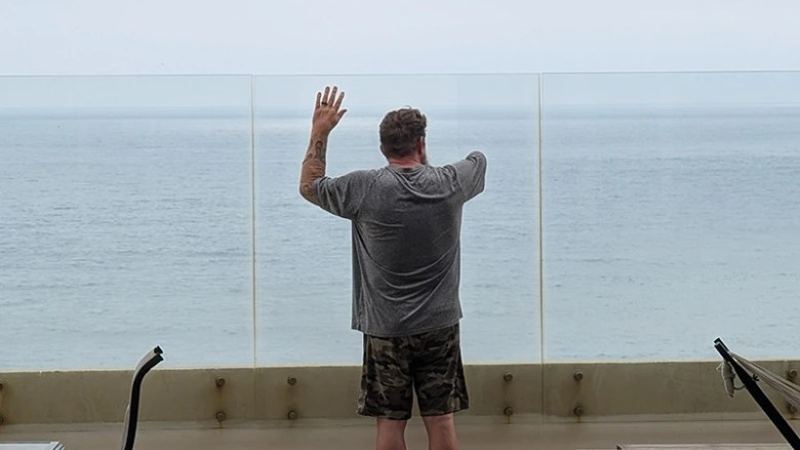
Veterans seeking relief from PTSD, depression, and alcohol addiction are traveling to clinics in Tijuana to undergo experimental psychedelic treatments unavailable in the United States. Two companies, Ambio Life Sciences and The Mission Within Center, report treating approximately 3,000 U.S. veterans over the last decade using ibogaine and 5-MeO-DMT, drugs classified as Schedule 1 substances by the DEA.
The Treatment Protocol and Medical Risks
Clinics charge around $8,000 for a week-long psychedelic treatment combining ibogaine—derived from the root of a central African shrub—with 5-MeO-DMT, a chemical secreted by the Sonoran desert toad. Ambio requires an EKG and multiple medical tests before treatment, as ibogaine has a narrow therapeutic window; exceeding effective doses can cause heart arrhythmias. A 2022 review of medical literature found 38 deaths and 20 medical emergencies associated with ibogaine use, though most involved opioid addiction treatment and other emergencies may have gone undocumented in nonmedical settings.
According to Isaac Pulido, a nurse with a doctorate specializing in intensive care who oversees treatments at Ambio, doses vary by body weight and patients can take booster pills if they feel nothing after two hours. Few people report enjoying the experience; many vomit during the more-than-10-hour trip, which patients frame as “purging” or part of healing. Some see visions of deceased relatives or experience nothing at all.
Neurochemical Effects and Long-Term Outcomes
Ibogaine’s effect on the brain remains incompletely understood by neuroscience. While the drug leaves the bloodstream within 24 hours, its metabolite noribogaine remains longer, pumping dopamine—the neurotransmitter associated with mood and motivation—into the brain. Pioneering ibogaine researcher Deborah Mash explained: “You’re helping to restore dopamine homeostasis in the brain. The enduring effect is a question that neuroscience hasn’t completely worked out.”
However, controversy exists over combining ibogaine with 5-MeO-DMT. Albert Garcia-Romeu, an associate professor of psychiatry at Johns Hopkins University School of Medicine, stated: “There’s no good medical or scientific reason for that at all.” Additionally, psychedelics reopen “critical periods” when the brain is more sensitive to its environment, according to UC Berkeley neuroscience professor Gul Dolen. Traumatic stress after taking psychedelics “can do more damage than good,” Dolen warned, comparing the effect to “open-mind surgery.”
Veteran Experiences
Many veterans report experiencing initial relief. Marc Dervaes, a veteran who lost his right arm in Afghanistan and battled depression and alcoholism, described feeling transformed after his first trip: “I felt reborn. There was no anxiety, fear, or anger; I felt safe.” However, when his friend died by suicide less than a month after treatment, his trauma returned and he resumed drinking—what he called “regression.” He subsequently returned to Ambio in December for a second treatment.
This article is an AI-assisted summary. All facts and figures are drawn from the original report: https://timesofsandiego.com/health/2026/01/11/veteran-travels-to-mexico-in-search-of-healing-through-a-psychedelic-trip/