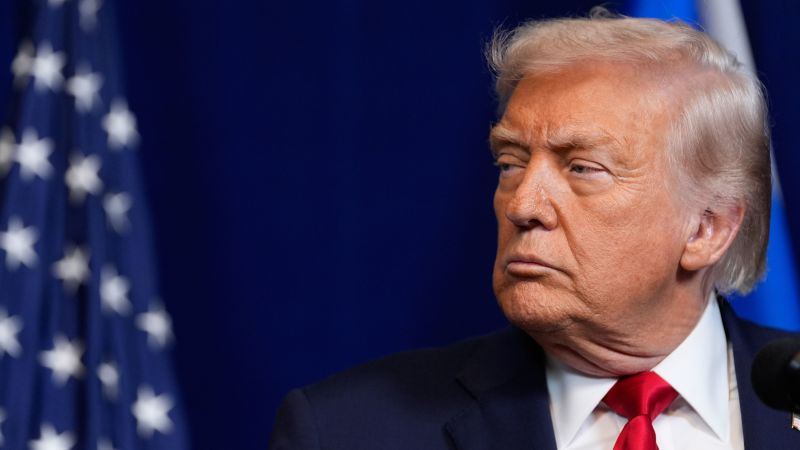
President Trump recently disclosed details about his health regimen that have raised medical questions. The oldest president to assume office has faced scrutiny over recent doctors’ visits, visible bruises on his hands, and reports of apparent fatigue. In an interview with the Wall Street Journal, Trump attributed the visible bruising to taking a higher dose of aspirin than his doctors recommend, saying “I want nice, thin blood pouring through my heart.”
Trump told the Journal that he takes 325 milligrams of aspirin daily — about four times the standard preventive dose of 81 milligrams — for cardiac prevention. Medical experts note this is concerning. While aspirin was once widely prescribed for cardiovascular disease prevention, 2019 medical guidance advised against routine use unless a patient has a heart condition or other health risks, citing heightened bleeding risk. Dr. Fahmi Farah, an invasive cardiologist and CEO of Bentley Heart in Fort Worth, Texas, explained that full-dose aspirin carries significant risks. “The full-dose aspirin has a lot more risk factors associated with it, and for the most part, those are GI risk factors. People who take full-dose aspirin are more prone to having GI bleeding, especially if they have ulcers,” Farah said. Trump’s physician, Navy Captain Dr. Sean Barbabella, has defended the regimen, stating that “President Trump’s medical evaluations and laboratory results continue to show excellent metabolic health, and have revealed his cardiovascular health puts him 14 years younger than his age.”
Advanced Imaging and Cognitive Testing
In October, Trump underwent what was initially described as an MRI but was later clarified as a CT scan, performed to rule out cardiovascular issues. Barbabella stated it “was perfectly normal and revealed absolutely no abnormalities.” In a Truth Social post, Trump announced he had scored “100%” on his “third straight” cognitive test. It was not immediately clear which test he referenced, though in April 2025 he reportedly scored 30 out of 30 on the Montreal Cognitive Assessment, a 10-minute screening used to detect mild cognitive impairment. Experts note that a normal score means no obvious cognitive impairment was detected, but the test does not measure intelligence, judgment, or overall cognitive fitness.
Lifestyle Factors and Health
Trump told the Journal he gets little sleep, finds most exercise boring, and has not changed his diet, which favors fast food. Dr. Andrew Freeman, director of cardiovascular prevention at National Jewish Health in Denver, emphasized the importance of lifestyle beyond genetics. “Your genes are part of the equation, for sure, but it’s the environment you put them in, including diet and exercise,” Freeman said. Trump attributes his health to “very good genetics,” noting his parents remained active late in life.
This article is an AI-assisted summary. All facts and figures are drawn from the original report: https://recentlyheard.com/aspirin-ct-scans-and-sleep-five-questions-raised-by-trumps-new-disclosures-on-his-health/