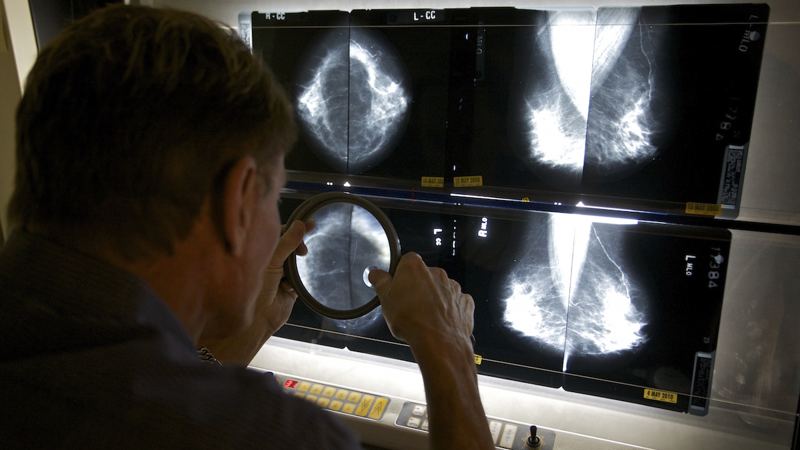
Routine mammograms may be able to detect signs of heart disease by revealing breast arterial calcifications, calcium buildups within breast arteries that may be associated with cardiovascular risk. A case study at Mount Sinai Health System illustrates how this finding can prompt early intervention before serious complications occur.
Nancy Preston, 67, had no heart attack symptoms, chest discomfort, shortness of breath, or heart palpitations. However, her annual mammogram at Mount Sinai in October 2024 detected breast arterial calcifications. Her high blood pressure and Type 2 diabetes—conditions that increase heart disease risk—had been under control. Preston was a yoga enthusiast who exercised daily and followed a healthy diet. Doctors conducted a cardiac stress test, which monitors the heart during physical exertion. “In [Preston’s] case, her heart function was very strong at rest, but during the stress portion, part of her heart muscle was not squeezing appropriately,” said Dr. Mary Ann McLaughlin, a cardiologist at Mount Sinai. “Her results indicated multivessel coronary artery disease.” Preston underwent quintuple bypass surgery in July and credits the BAC findings with saving her life.
Research and medical implications
A 2018 review in the Journal of Cardiovascular Imaging advocated for mammography as a screening tool for heart disease. A 2022 study in Circulation: Cardiovascular Imaging found an association between breast arterial calcification and heart disease in postmenopausal women ages 60 to 79, while 2024 research in JACC: Advances noted that BAC was “especially predictive” of heart disease in younger women ages 40 to 59. Mount Sinai is conducting a behavioral study involving 14,875 women ages 40 and older to analyze BAC rates in a diverse sample. The study expects results in early 2027. Breast arterial calcifications, specific to breast arteries, are different from common benign calcifications in other breast areas. According to the National Cancer Institute, macrocalcifications appearing as white dots are typically benign, while microcalcifications appearing as white specks may indicate cancer. About half of women develop benign breast calcifications.
This article is an AI-assisted summary. All facts and figures are drawn from the original report: https://www.nbcbayarea.com/news/national-international/mammogram-breast-calcium-deposits-heart-disease-study/4007244/