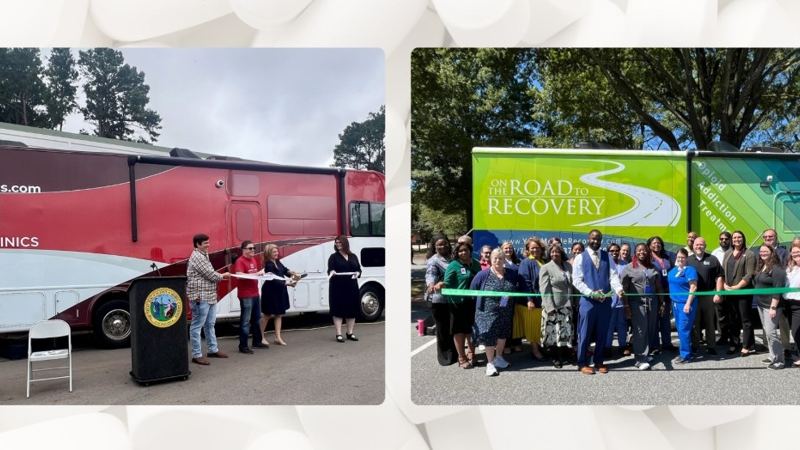
North Carolina is turning to mobile clinics as a key strategy to expand access to medications for opioid use disorder, bringing treatment directly to communities with limited healthcare infrastructure. More than 3,000 North Carolinians died from opioid overdose in 2024, with over 41,500 deaths from overdoses since 2000.
The state’s first mobile clinic, operated by Morse Clinics, launched in Raleigh in July and dispensed medications to 84 people by late August. A second mobile unit run by New Season started serving people in Greensboro, with as many as 10 mobile units potentially operating across North Carolina in coming months. Six units are funded by $3.75 million that the North Carolina Department of Health and Human Services received after Hurricane Helene.
These mobile clinics operate as licensed extensions of existing brick-and-mortar opioid treatment programs and can deliver the three FDA-approved medications for opioid use disorder: buprenorphine, methadone, and naltrexone. The units are especially positioned to reach underserved populations—people in rural areas, shelters, and jails where transportation barriers and stigma prevent access to care. Existing opioid treatment programs currently serve only 55 of North Carolina’s 100 counties, leaving gaps and forcing many patients to travel long distances.
An estimated 231,000 North Carolinians older than 12 struggle with opioid use disorder and could benefit from medication-based treatment, yet fewer than half receive any form of treatment. The first Lady Anna Stein identified reducing stigma toward people with substance use disorders as a priority issue. Mobile units are less costly than building brick-and-mortar clinics and can “move and figure out where the need is,” according to Anna Stanley, who oversees North Carolina’s opioid treatment programs. State health officials see mobile units as key to achieving at least one opioid treatment program in every county.
This article is an AI-assisted summary. All facts and figures are drawn from the original report: https://www.northcarolinahealthnews.org/2025/09/16/nc-turns-to-mobile-clinics-expand-opioid-addiction-treatment/