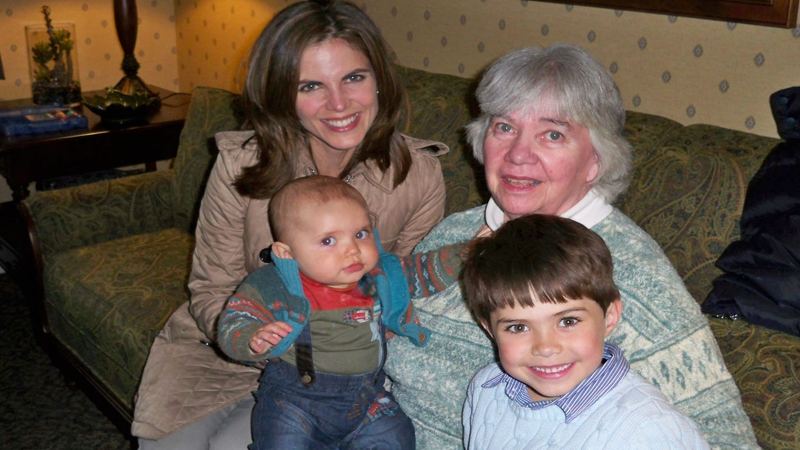
Former NBC news anchor and current CBS correspondent Natalie Morales, 54, finds herself increasingly anxious about Alzheimer’s disease. Her concern stems from personal experience: her mother-in-law, Kay Rhodes, died in 2014 after a years-long battle with Alzheimer’s. Rhodes was Morales’s age when she was diagnosed. Alzheimer’s impacts more than 7 million Americans today, according to the Alzheimer’s Association, and Morales is now part of a campaign with Kisunla, an FDA-approved treatment for early symptomatic Alzheimer’s disease, to raise awareness about early-onset symptoms.
Morales said she is very aware of her own memory lapses—moments when she can’t recall a word, a person’s name, or even her hotel room number on a work trip. When this happens, she wonders whether she’s overworking, experiencing perimenopause brain, or showing early signs of dementia. She encourages people to have conversations with their doctor whenever they notice a memory lapse or if they notice signs in a loved one, emphasizing that “there are many options now for people with dementia that didn’t exist when her mother-in-law had the disease” and “the outlook is so much more positive now.”
Morales’s family began noticing her mother-in-law’s memory and thinking issues about two years before diagnosis. They observed trouble completing simple tasks, repetition in conversations, anxiety, and paranoia. Morales served as a long-distance caregiver while her father-in-law was the primary caregiver during those years. The impact on him was physical, emotional, and financial. “The more they invest in someone else and in that care, they lose themselves in that,” Morales said of caregivers generally. After her mother-in-law’s death, her father-in-law was diagnosed with Parkinson’s disease and died in 2021.
The COVID-19 pandemic made things significantly more challenging for long-distance caregivers. Morales emphasized that knowing how a loved one wants to be cared for is essential. “I think these are such important conversations that a lot of us are so afraid to broach,” she said. Knowing her father-in-law’s wishes allowed her family to support his decision to live his last days in his own home and on his own terms, giving them peace of mind in their decisions. “I think it allowed him to have the best possible outcome with his own diagnosis,” Morales said.
This article is an AI-assisted summary. All facts and figures are drawn from the original report: https://www.usatoday.com/story/life/health-wellness/2026/06/09/natalie-morales-alzheimers-disease-caregiving/90180545007/