The Centers for Medicare and Medicaid Services issued a new rule this week that takes a harder line on defining which low-income enrollees qualify for an exemption as “medically frail” under the first-ever federal Medicaid work requirement, set to begin in January in most states. The stricter interpretation came as a surprise to many states and patient advocacy groups and immediately sparked an outcry.
Under the new rule, to qualify for the medical frailty exemption, enrollees must not only have an illness or medical condition, such as cancer or a behavioral health issue, but that condition must also significantly impair their ability to comply with the work mandate. The work mandate, included in President Donald Trump and his party’s One Big Beautiful Bill Act, requires Medicaid expansion enrollees ages 19 through 64 to work, volunteer, attend school or participate in a job program at least 80 hours a month, unless they are eligible for certain exemptions. According to a Congressional Budget Office estimate from last summer, some 5.3 million more people are expected to be uninsured in 2034 because of the work requirement.
Patient advocacy groups say the stricter interpretation puts people’s lives at risk by jeopardizing their coverage and access to care. A group of 48 patient organizations, including the American Lung Association, the Crohn’s & Colitis Foundation, and the National Alliance on Mental Illness, stated that “Redefining the law’s medical frailty exemption to only apply to individuals who can prove they cannot work and drastically limiting the ability of states to accept self-attestation from patients about compliance and exemptions starting in 2028 clearly conflicts with the law.” Jennifer Hoque, associate policy principal at the American Cancer Society Cancer Action Network, said, “Because of these requirements, an individual fighting for their life in active cancer treatment will now also have to have to climb what, for some, will be insurmountable obstacles to get or maintain coverage.”
The surprise interpretation adds an extra, two-step hurdle for state Medicaid agencies, who are already facing tight deadlines to stand up their work requirement programs by January. CMS did not provide guidance to states on how to define and assess whether a person meets the medically frail exemption criteria, according to Jennifer Tolbert, deputy director of the Program on Medicaid and the Uninsured at KFF. This means states will likely adopt different practices, with no uniform standard for determining if someone is too sick to work. Additionally, starting in 2028, enrollees and those signing up for Medicaid will only be allowed to self-attest that they qualify for the medical frailty exemption once. If states don’t have data on file after that, enrollees may have to provide documentation.
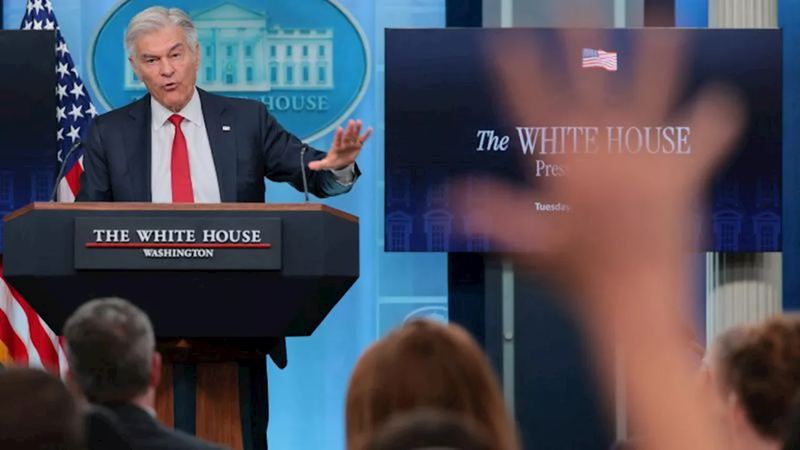
CMS officials defended their interpretation, with Dan Brillman, who directs CMS’ Medicaid program, stating, “The exemption ensures that work expectations are directed towards those who can participate, while protecting those who cannot.” Dr. Mehmet Oz, who oversees CMS, linked the provisions to maintaining program integrity, saying, “The mantra that we kept coming back to was that we’re forgiving but we’re not foolish.”
This article is an AI-assisted summary. All facts and figures are drawn from the original report: https://us.headtopics.com/news/trump-administration-makes-it-harder-for-some-sick-84208211