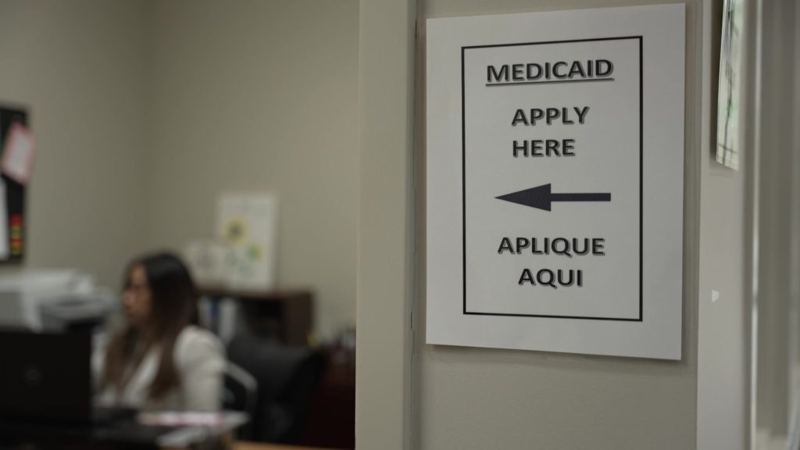
Nebraska became the first state to enact stricter Medicaid work requirements in May 2026, eight months ahead of a January 1, 2027 federal deadline. The impact was immediate: the Health Center Association of Nebraska, which typically enrolls about 15 people monthly in Medicaid, enrolled zero new applicants in May. CEO Amy Behnke attributed the sharp drop to people assuming they’re ineligible or feeling “too overwhelming or cumbersome” to maintain coverage.
The requirements stem from Trump’s “One Big Beautiful Bill Act,” signed into law last summer, which established “community engagement requirements” for low-income and disabled Medicaid recipients. Millions of enrollees across 43 states plus Washington, D.C. must now prove they’re working, volunteering, or attending school for at least 80 hours monthly or lose benefits starting in 2027. The Congressional Budget Office estimates these requirements will save the federal government $326 billion over 10 years while resulting in approximately 5 million people losing coverage annually between 2029 and 2034.
Applicants can meet requirements by working 80 hours, completing 80 hours of community service, participating in a work program for 80 hours, enrolling in school half-time, or earning at least $580—equivalent to 80 hours at the federal minimum wage of $7.25. Seasonal workers must average $580 monthly income over six months. Starting 2027, Medicaid recipients must re-enroll every six months. Exemptions include parents of children 13 and younger, veterans with disabilities, people in substance use programs, and pregnant people.
History offers cautionary lessons. When Arkansas implemented work requirements in 2018, 18,000 people lost coverage between July and December. A New England Journal of Medicine study found that 97 percent of affected Arkansans aged 30-49 were already meeting requirements or should have been exempt. In both Arkansas and New Hampshire, 72 to 82 percent of people required to document work were deemed “noncompliant” in the first month, though many were actually compliant—highlighting administrative barriers that prevent eligible people from maintaining coverage. Nebraska officials report community partners face difficulties accessing Spanish-language support lines, and the state’s system of reviewing only primary diagnosis codes may miss documentation of medical frailty conditions like anxiety or diabetes.
This article is an AI-assisted summary. All facts and figures are drawn from the original report: https://www.pbs.org/newshour/nation/as-states-face-stricter-medicaid-work-requirements-nebraska-is-an-early-test