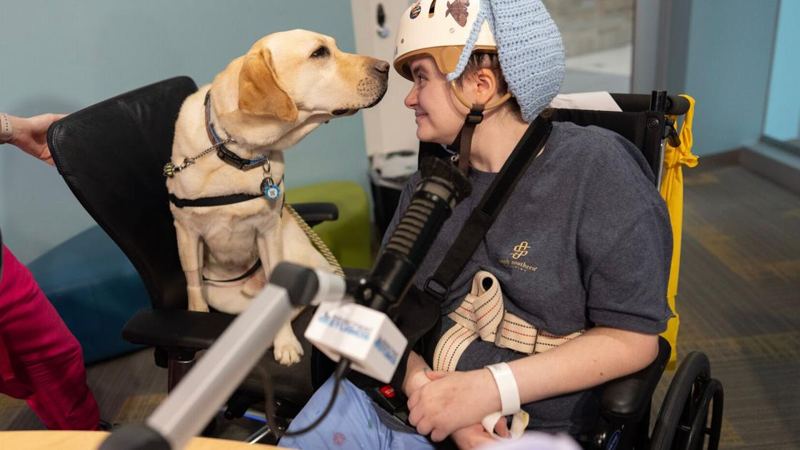
Facility dogs—specially trained, full-time working dogs distinct from therapy dogs brought by volunteers—are increasingly present at children’s hospitals across the nation, providing emotional support during stressful procedures and helping pediatric patients recover. Research demonstrates that even brief interactions with facility dogs improve children’s overall well-being, decrease perceived pain, and reduce stress markers like cortisol levels and blood pressure.
Cincinnati Children’s Hospital has four facility dogs, including Hadley, a Labrador-golden retriever mix who works with child life assistant Schellie Scott. Recently, 5-year-old Calvin Owens, tethered to medical equipment, managed to stand briefly and toss a ball to Hadley on a hospital patio—a small victory that prompted caregivers to cheer. Hadley mostly interacts with patients but receives breaks to play. While some hospitals like Mount Sinai Kravis Children’s Hospital in New York and St. Louis Children’s Hospital have long-standing programs, new programs continue emerging, with Johns Hopkins Children’s Center in Maryland introducing its first two facility dogs in March.
Hospitals typically obtain dogs from nonprofits like Canine Companions, which breeds, raises, and trains them before placing them with staff members while retaining ownership. Dogs and handlers live and work together. While hospitals don’t pay for the dogs, they cover food and veterinary care—significant expenses for larger breeds like Labradors and golden retrievers. Most hospitals fundraise or seek grants to manage costs.
A 2022 study analyzing surveys across 17 children’s hospitals found that facility dogs provided comforting presence, built rapport, and normalized the hospital environment. A 2021 study in the Journal of Pediatric Nursing concluded animal-assisted therapies controlled pain and blood pressure in children and teens. Facility dogs are allowed in more sensitive hospital areas than volunteer dogs. At St. Louis Children’s Hospital, Opal splits time between the pediatric behavioral health unit and child protection program. Hadley receives baths twice monthly because she works in cancer and blood diseases areas where children may have reduced immunity. The one exception to infection control protocols is when a dying child wants a dog close by—in those cases, comfort outweighs germ concerns.
This article is an AI-assisted summary. All facts and figures are drawn from the original report: https://www.rutlandherald.com/ap/lifestyles/good-dog-more-children-s-hospitals-turn-to-furry-caregivers-to-help-kids-heal/article_fe72a492-b7ca-50dc-b0c9-a2ee40136530.html