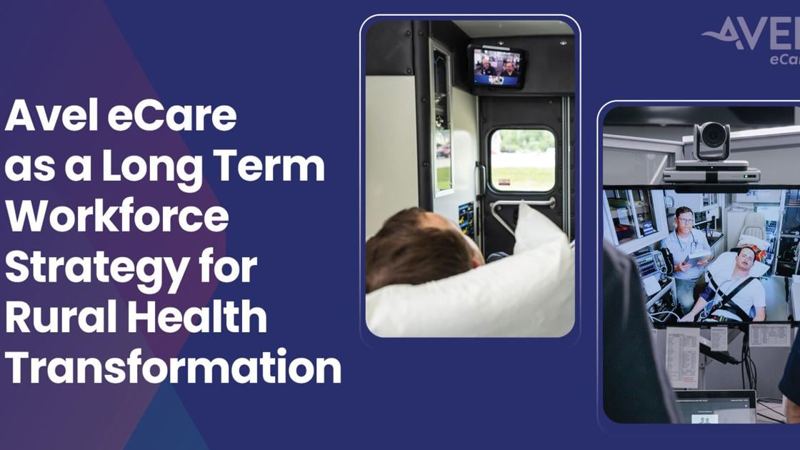
Avel eCare, the nation’s leading Virtual Health System, is positioning telemedicine as a long-term workforce stabilization strategy for rural healthcare organizations rather than a temporary staffing solution. Founded in 1993 as the nation’s first virtual hospital, the organization now supports healthcare providers across 46 states through its integrated Virtual Health System model.
Addressing Provider Isolation and Burnout
Rural healthcare organizations face significant challenges recruiting and retaining clinicians, particularly in remote areas where providers may work in isolation during high-acuity situations. Avel’s Virtual Health System provides clinician-to-clinician support across emergency medicine, inpatient care, ICU, behavioral health, EMS, pharmacy, virtual nursing, and specialty services. According to Dr. Kelly Rhone, Chief Medical Officer at Avel eCare, the model strengthens rather than replaces local care teams: “Virtual care is not about replacing local providers. It is about strengthening and extending the local care team so clinicians feel supported, connected, and able to continue practicing in the communities that depend on them.” Keith Holt, Director of Acute Inpatient Services and Senior Care at Avel eCare, emphasized the retention benefits: “Clinicians know they have experienced intensivists and nurses available at the push of a button. That level of support helps reduce burnout, improves confidence, and creates a stronger environment for workforce retention and recruitment.”
Building Sustainable Rural Infrastructure
The peer-to-peer collaboration model reduces overnight call pressure, extends specialty expertise into underserved communities, and creates more flexible staffing arrangements while preserving local decision-making authority. Unlike temporary staffing solutions, Avel’s services integrate directly into existing workflows and care teams. Healthcare leaders are increasingly viewing virtual care as part of broader workforce sustainability strategies, with the model helping organizations maintain local care delivery while bringing specialty expertise into rural communities that struggle to recruit full-time specialists. Dr. Rhone concluded that virtual care allows hospitals to “strengthen their workforce, improve support for clinicians, and continue delivering high-quality care close to home in a way that is sustainable long term.”
This article is an AI-assisted summary. All facts and figures are drawn from the original report: https://www.timesargus.com/ap/state/avel-ecare-highlights-virtual-health-as-a-long-term-workforce-strategy-for-rural-health-transformation/article_d086e263-4700-55f6-b8f6-99006864f60d.html