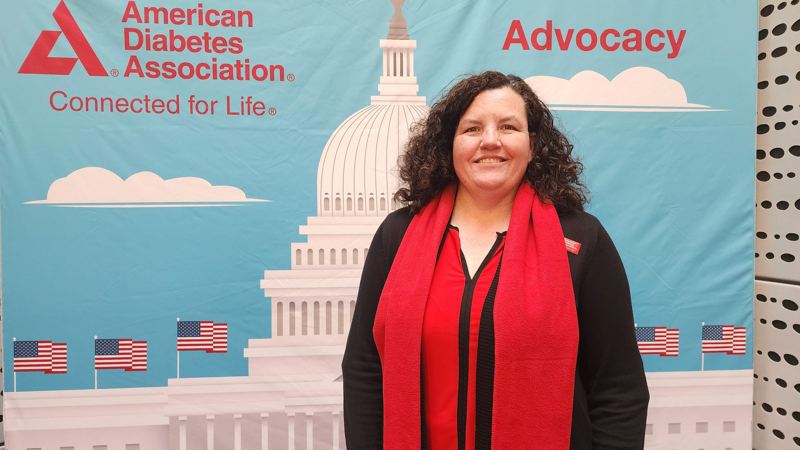
Deirdre Murphy was diagnosed with Type 1 diabetes at age 34, which profoundly changed her life. Now 54, she has become a staunch advocate for diabetes research funding, traveling to Washington D.C. almost every year since 2013 to meet with members of Congress as part of the American Diabetes Association’s Call to Congress. Last week, Murphy was one of 130 advocates from across the country, and the only representative from San Antonio, where diabetes remains a significant public health issue.
The Challenge of Living with Diabetes
Murphy’s journey with the disease was complicated. She was initially misdiagnosed with Type 2 diabetes in 2001, a common problem for adults—Type 1 accounts for about 10% of diabetes cases while Type 2 accounts for over 90%. In 2006, Murphy was admitted to the hospital with diabetic ketoacidosis, a life-threatening condition, and was subsequently diagnosed with latent autoimmune diabetes in adults (LADA), a slower-progressing form of Type 1 diabetes. She has said that the constant management and mental load of the disease “would never end”—there is no break from it.
Funding Goals and Advocacy
Murphy previously spent 22 years working for the City of San Antonio, including with its Metropolitan Health District. In October, the city’s health department announced that its Diabetes Prevention and Control Program would lose 72% of its funding due to the expiration of federal Medicaid funding.
Last week, advocates like Murphy asked members of Congress to increase funding across federal diabetes programs to roughly $3 billion, about a 5% increase from current levels, according to the American Diabetes Association. The total annual cost of diabetes in the U.S. exceeds $400 billion. As Murphy pointed out to lawmakers, this proposed increase would represent a minimal amount compared to the overall expense.
Technology and Hope
Since 2007, Murphy has worn an insulin pump, which provides a continuous supply of insulin to maintain consistent blood glucose levels. In 2012, she began wearing a continuous glucose monitor, which offers detailed blood glucose data without daily finger pricks. Murphy believes the field is close to developing a fully automated “closed-loop” system that would function as an artificial pancreas worn externally, eliminating much of the daily burden of management.
This article is an AI-assisted summary. All facts and figures are drawn from the original report: https://sanantonioreport.org/san-antonio-advocate-diabetes-funding-congress-deirdre-murphy/