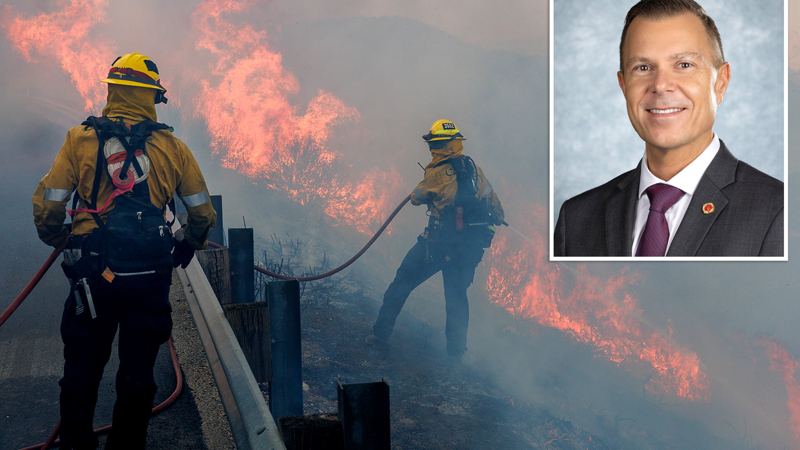
First responders in the United States face approximately a 10-year reduction in life expectancy compared to the general population, according to experts. Despite this inevitable risk, practicing healthy lifestyle habits can help protect longevity. Mike Morlan, a Sacramento firefighter of nearly 30 years and district vice president at CAL FIRE Local 2881, spoke to Fox News Digital about prioritizing health in the line of duty and the occupational hazards firefighters face.
Occupational Exposure and Health Risks
“For me, it’s personal,” Morlan said. “I lost both my parents to cancer … and I learned early in my career that heart disease and cancer are what take firefighters out. We don’t necessarily usually die in a fire. We die years later from what the job does to us.” Morlan explained that “shift after shift,” firefighters are exposed to smoke, toxins, carcinogens, and extreme heat, leading to sleep disruptions and medical conditions. “I’ve stood at memorials for people who have never made it to retirement,” he said. “Even for some of our members and firefighters who do retire — a year or two after that, that’s when they pass away.”
Dr. Eve Henry, chief medical officer at Hundred Health in California, said the fact that firefighters tend to die 10 years sooner than the general American population should be a “wake-up call” for the medical community. “That’s not a marginal difference — it’s a decade of life lost,” she said. “When you combine repeated exposure to toxic chemicals and carcinogens with the extreme physical and physiological stress of the job, it creates a perfect storm for chronic disease to accelerate much faster than it would in a typical office environment.”
Prevention and Behavioral Change
Morlan recommends treating the body like “mission-critical equipment,” pursuing annual physicals, biomarker testing, and data tracking through wearable devices. Henry encourages first responders to treat recovery with the same “clinical respect” they give their training. “Sleep is the single most important variable in that equation,” she said. “I know how difficult that is with a firehouse schedule, but when you are off-shift, you have to be disciplined about a strict sleep environment to let your body repair the damage.”
CAL FIRE Local 2881 and Hundred Health have launched a program offering health assessments and personalized plans focused on improving mental and physical well-being, tracking biomarkers and wearable data to spot early health changes firefighters may not detect on their own.
This article is an AI-assisted summary. All facts and figures are drawn from the original report: https://nypost.com/2026/03/09/health/firefighter-shares-longevity-tips-as-first-responders-face-10-year-shorter-lifespan/