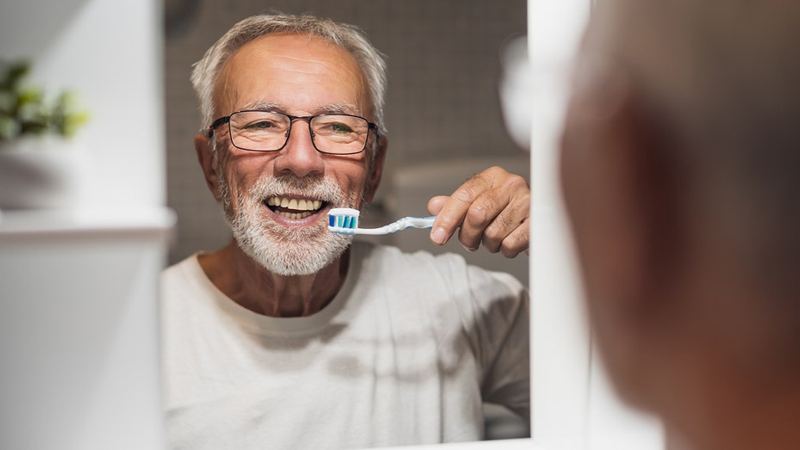
Growing research suggests that good oral hygiene is linked to a reduced risk of serious conditions, including Alzheimer’s disease and rheumatoid arthritis. At a recent American Association for the Advancement of Science (AAAS) conference, researchers presented evidence treating the mouth as a “gateway to overall health,” noting that the oral cavity and the body are deeply interconnected.
Panelists from medical schools across the U.S. discussed how research now shows the oral cavity can influence the health of other organs, including the joints, brain and gut. Alpdogan Kantarci, a professor at the University of Minnesota’s School of Dentistry, stated that “maintaining your teeth in health may be associated with a reduced risk of more than 50 systemic conditions.” He noted that “people with mild or moderate diseases who are brushing and taking care of their teeth or seeing a dentist and having advanced cleanings are showing much better cognitive responses.”
Periodontitis, a severe form of gum disease that worsens with age, affects the bone and tissues supporting the teeth, leading to ongoing inflammation and progressive damage. This triggers immune responses and increases the risk of rheumatoid arthritis and dementia. Research published in The Lancet Health Longevity in 2024 concluded that oral health should be considered “an integral component of the overall healthcare system and an important factor in assessing aging.” Additional research published in Neurology in 2023 found that people with good dental hygiene had better memory, while gum disease and tooth loss were linked with less gray matter in the brain and reduced decline in mental health.
Dr. Michael J. Wei, a cosmetic and restorative dentist in New York City, emphasized that brushing three times a day helps control the bacterial biofilm that fuels gum disease and chronic inflammation. “Inflammation in the mouth does not remain isolated. It can influence cardiovascular health, metabolic function and immune balance,” he explained. Experts recommend brushing twice a day for two minutes with a soft-bristled toothbrush and gentle pressure. Brushing too aggressively or using hard-bristled toothbrushes can lead to enamel wear, gum recession and tooth sensitivity, so technique matters as much as frequency.
This article is an AI-assisted summary. All facts and figures are drawn from the original report: https://www.foxnews.com/health/simple-brushing-routine-could-reduce-dementia-risk-say-dental-health-experts